Smelly Feet, Itchy Athlete's Foot: Lao Hu Teaches You Methods to Eliminate These Annoying Conditions
A few days ago, I went to visit a friend's home. While everyone was engrossed in lively conversation, his grandson returned.
After taking off my shoes, wow! The room filled with a foul odor, it's nauseating, how could this be?
Actually, this is a physiological phenomenon common among young people.
Foot odor occurs because the soles of the feet have numerous sweat glands. Under conditions of excessive sweating, bacteria on the feet multiply rapidly and break down keratin proteins. Combined with urea and lactic acid in sweat, this produces the unpleasant smell.
Foot odor is typically considered to be caused by increased sweating on the feet, wearing non-breathable shoes, or infrequent, insufficient, or incomplete washing of the feet, as well as not washing socks regularly.
Clinically, it may also be a precursor to tinea pedis.
The friend felt quite embarrassed at the time and quickly had the child take the shoes outside, instructing them to wash their feet in the bathroom.
Upon seeing this situation, I told my friend a method to use for the child.
This is a method I have used for many years with noticeable results, as follows: Take 100 grams of Humulus scandens and 15 grams of mugwort, decoct them in water, and when the water cools to a slightly scalding temperature, soak the feet in the basin for 20 to 30 minutes. While soaking, scrub and wash the feet, then dry them thoroughly. Repeat once or twice daily.
I also made the following recommendations:
1. Change socks frequently;
2. Clean shoes regularly;
3. Wash your feet daily.
A few days later, my friend told me that the child's foot odor was gone.
Now let me introduce the names of the medicinal herbs used.
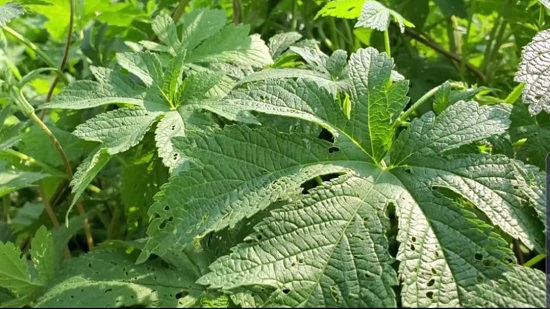
Humulus scandens
Humulus scandens: Also known as lala vine, lala creeper, snake-cut vine, skin-cutting vine, lao dao sprout, and five-clawed dragon.
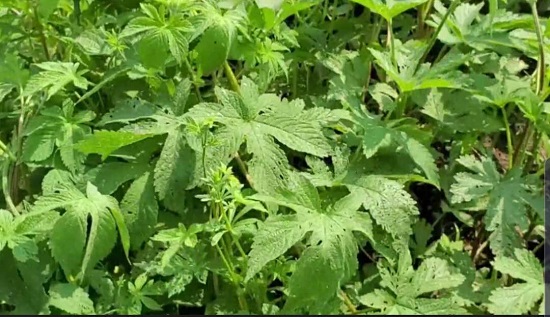
Hops
It possesses the properties of clearing heat, detoxifying, antibacterial action, and eliminating scabies and ringworm.
Decocting it in water for external washing can treat skin eczema, pruritus, and other conditions.
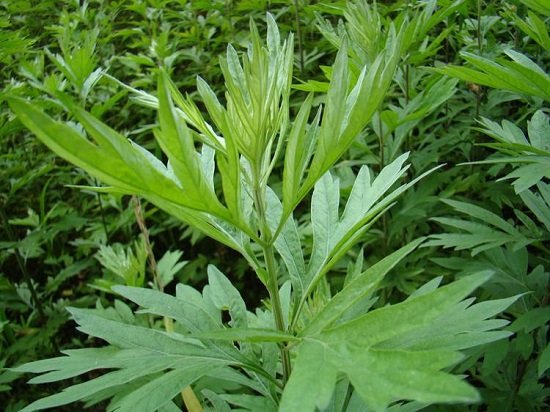
Mugwort
Artemisia argyi: Also known as aromatic mugwort, Qi mugwort, and wormwood.
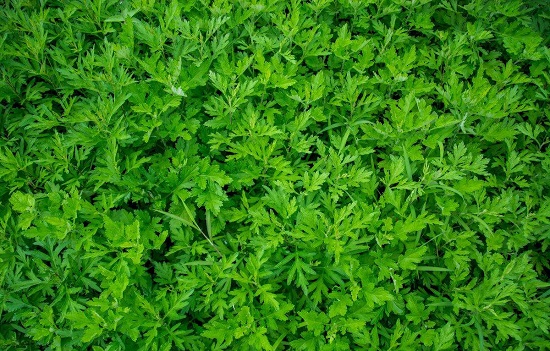
It has a bitter, pungent taste and warm nature, entering the spleen, liver, and kidney meridians. It has the effects of dispersing cold and eliminating dampness, warming the meridians to stop bleeding, detoxifying, and killing insects. When the two medicinal herbs are combined, their special efficacy is demonstrated.