Although Schisandra chinensis is small in size, it contains all five flavors that correspond to the five organs, capable of tonifying the qi of the five organs and harmoniously nourishing them.
Today, Traditional Chinese Medicine Practitioner Lao Hu introduces a plant that serves both medicinal and dietary purposes: Schisandra chinensis, also known as Xuanji, Huiji, Wumeizi, and mountain pepper. It tastes sour and sweet, has a warm nature, and belongs to the lung, heart, and kidney meridians.
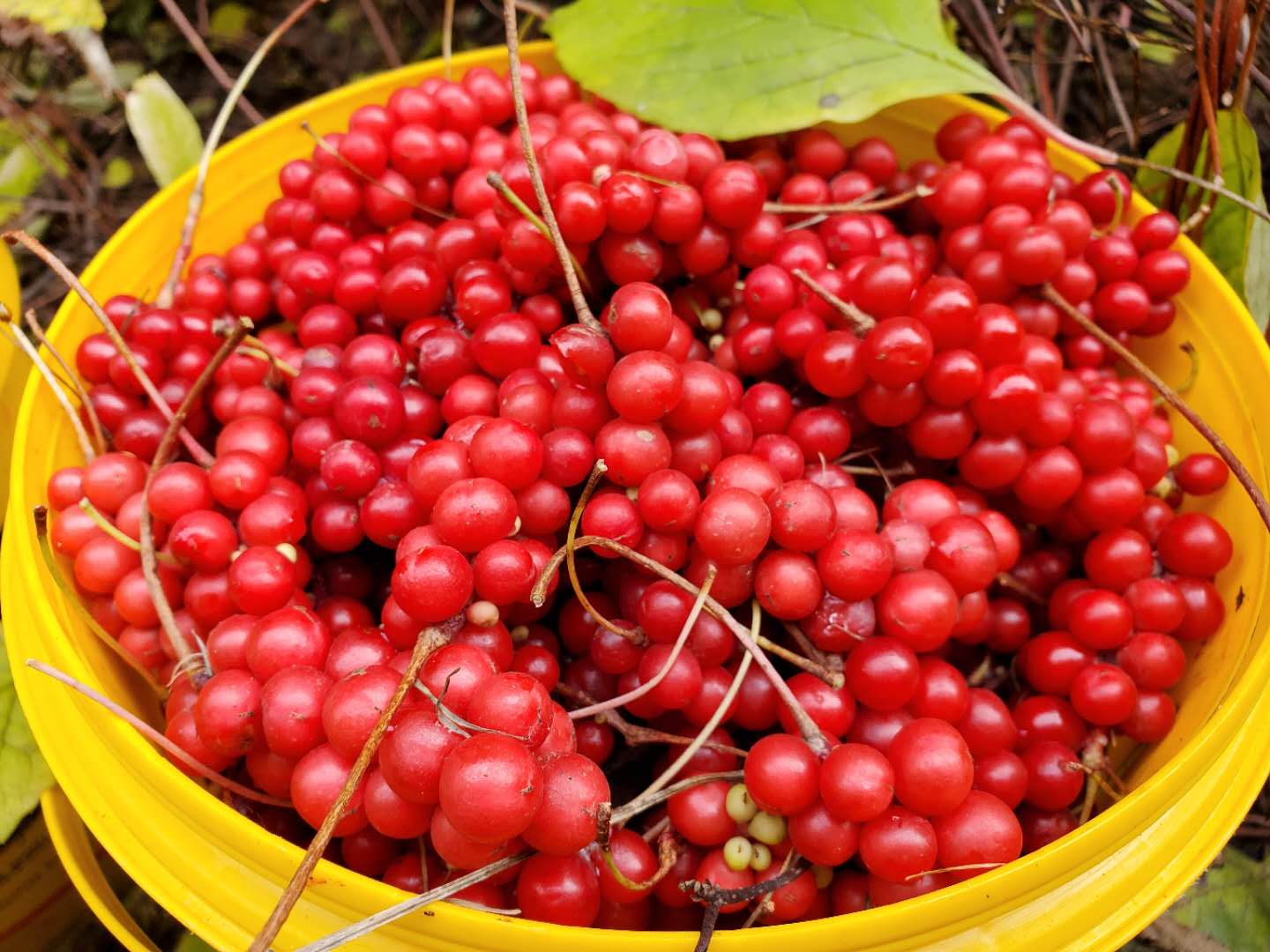
Schisandra chinensis
Why is this little red berry called 'five-flavor berry'? It's because it contains the five tastes of sour, bitter, sweet, pungent, and salty. Though small, the schisandra berry possesses all five flavors: sour enters the liver, bitter enters the heart, sweet enters the spleen, pungent enters the lungs, and salty enters the kidneys. The five flavors correspond to the five zang organs, capable of supplementing the qi of the five zang organs and assisting in nourishing them.
Schisandra berry is the ripe fruit of the Schisandra chinensis plant. It has the effects of astringency and consolidation, tonifying qi and promoting fluid production, and nourishing the kidneys to calm the mind. It is indicated for chronic cough and asthmatic breathing, spontaneous sweating, night sweats, seminal emission, spermatorrhea, chronic diarrhea unrelieved, thirst due to fluid injury, wasting-thirst, palpitations, insomnia, and excessive dreaming. In clinical studies, schisandra has been found to have the effect of protecting the liver and regenerating liver tissue.

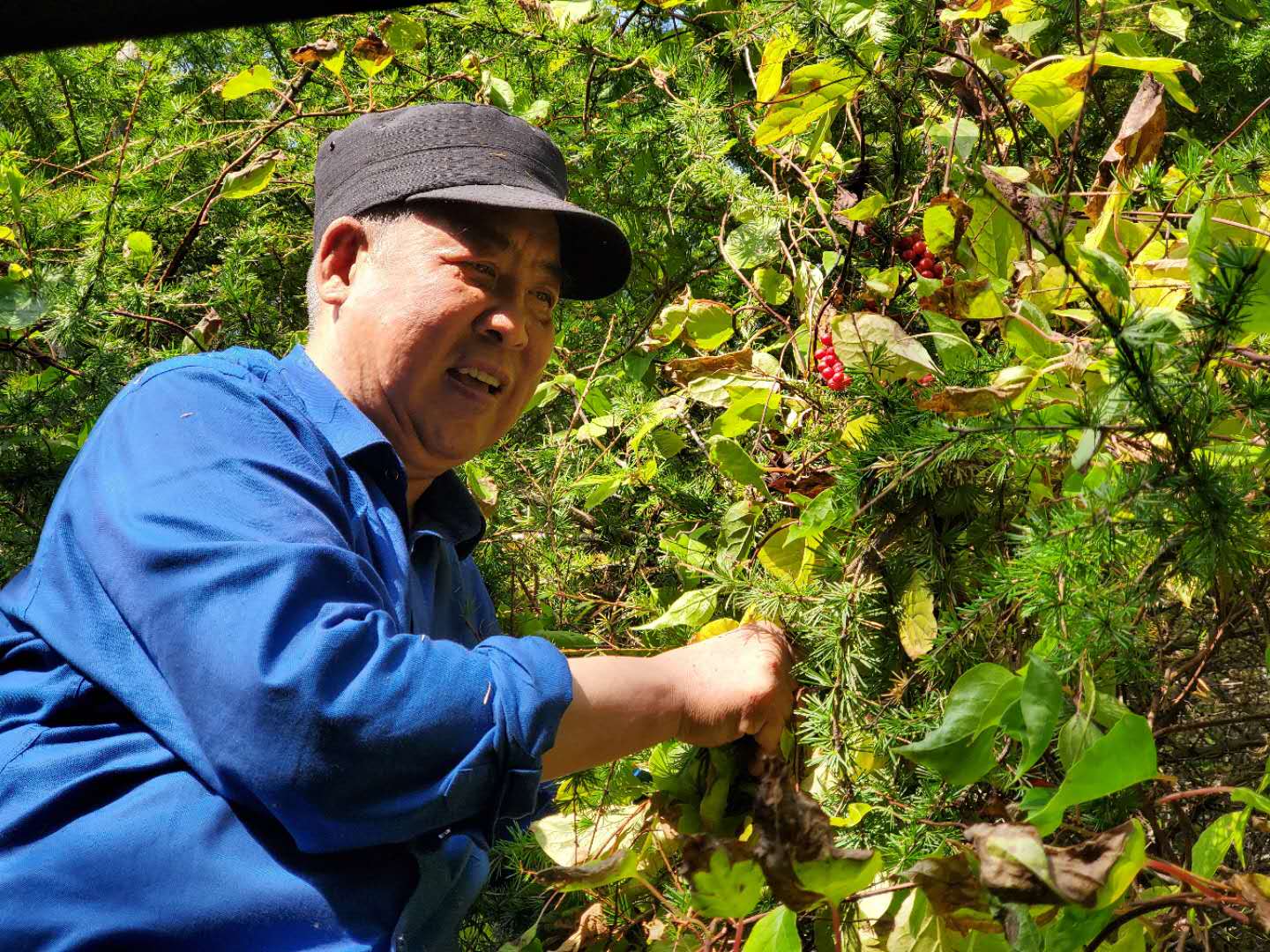
Mr. Hu, a nearly 70-year-old traditional Chinese medicine practitioner, is picking schisandra berries.
Here, let's first understand the functions of the liver. The liver is the body's chemical factory. Over 500 biochemical reactions occur within it, and it performs more than 1,000 functions. These biochemical reactions and liver functions are closely related to the body's vital activities. Some of the main ones are as follows:
1. Carbohydrate Metabolism: The main component of the daily diet consists of starch-containing foods, known as carbohydrates (sugar). After digestion in the intestines, they are absorbed and enter the liver through the splenic portal vein.
2. Protein Metabolism: The primary components of daily consumed foods such as meat, chicken, fish, eggs, or soybeans are proteins. After digestion in the gastrointestinal tract, proteins are broken down into amino acids and absorbed by the intestines. They then enter the liver via the portal vein. The liver is an exceptionally powerful protein synthesizer in the human body.
3. Fat Metabolism: Oily substances in the diet are digested in the gastrointestinal tract with the aid of bile. Ultimately, they are broken down into fatty acids and glycerol, absorbed by the intestines, and transported to the liver through the portal vein.
4. Vitamin Metabolism: In addition to carbohydrates, proteins, and fats—the three essential elements for life activities—human life also depends on vitamins. The synthesis and storage of many vitamins, such as A, B, C, D, and K, are closely related to the liver.
5. Hormone Metabolism: The liver participates in the inactivation of hormones. When liver function is impaired over an extended period, it can lead to sexual hormone imbalance, decreased libido, reduced visual acuity, skin allergies, itching, hives, impotence, testicular atrophy, menstrual disorders in women, as well as palmar erythema and spider angiomas.
6. The gallbladder relies on the liver for survival. On average, the liver supplies the gallbladder with 800 to 1,000 milliliters of blood daily, enabling the gallbladder to produce bile for delivery to the gastrointestinal tract, which evenly coats the stomach wall to form a protective layer of gastric mucosa. Another part of the bile aids in the digestion and absorption of fats in the small intestine, participating in the absorption of vitamins, cholesterol, calcium, phosphorus, iron, and particularly fat-soluble vitamins A, D, E, and K. Bile also plays a stabilizing role in promoting intestinal peristalsis, inhibiting the growth of putrefactive bacteria in the intestines, and maintaining normal intestinal function. Additionally, it enhances physical endurance: In Russia, studies conducted on factory workers and children demonstrated that Schisandra chinensis can increase endurance and reduce the incidence of diseases.
7. Protection Against Free Radical Damage: Free radicals are the main cause of atherosclerosis, cancer, coronary heart disease, and immunodeficiency, and they are also the primary culprit in accelerating the aging process. The lignans contained in this nutritional supplement are potent antioxidants that can inhibit free radicals and increase the levels of glutathione, an antioxidant in the liver.
8. Slowing the Aging Process: According to research reports, Schisandra chinensis is often used as an anti-aging and Qi-tonifying supplement, and recent research results have further elucidated this principle. The lignans in Schisandra chinensis enhance the energy production of adenosine triphosphate (ATP) or mitochondria (the cell's energy stores) while protecting mitochondria from oxidative stress. Combined with other foods in the supplement, these effects of Schisandra chinensis further enhance the process of slowing the aging of human cells and tissues, helping prevent aging-related diseases such as heart failure, Alzheimer's disease, and Parkinson's disease.
Schisandra can promote the liver's detoxification process, protect the liver from toxins, and regenerate liver tissue damaged by alcohol abuse, drugs, or hepatitis, thereby safeguarding and enhancing heart function.
Schisandra facilitates oxygen exchange in tissue cells and has been proven to protect heart tissue in some cases of hypoxia and myocardial damage. It can also stabilize heart rate and alleviate hypertension, nourishing yin and consolidating essence.
Schisandra is one of the highly effective yin-nourishing and essence-consolidating tonics suitable for both men and women, capable of enhancing physical strength and endurance in both genders.
Schisandra can activate the nervous system, improving responsiveness, concentration, coordination, and mental clarity. Despite its stimulating effects, it does not cause the restlessness associated with caffeine. This small berry is sometimes used to treat depression and helps alleviate irritability and memory issues.