Liuwei Dihuang Pills were originally pediatric medicine, but now it's trendy for adults to use them for kidney tonification. Are you using them correctly?
Today, I’d like to share with you a famous ancient formula known both domestically and internationally: Liuwei Dihuang Pills. It is a renowned kidney-tonifying formula often used to treat symptoms of kidney yin deficiency such as soreness and weakness in the lower back and knees, and night sweats. Most people believe Liuwei Dihuang Pills are for adults. In fact, it was originally a pediatric medicine. The formula originates from the Song Dynasty imperial physician Qian Yi’s book "Key to Diagnosis and Treatment of Children's Diseases." This formula was derived from Cui Zhiti's "Eight-Ingredient Kidney Qi Pills" by removing two ingredients: cinnamon twig and aconite.
Qian Yi, also known as Zhongyang, was born in 1032 AD and passed away in 1113 AD at the age of 82. He was a renowned pediatric physician during the Song Dynasty of China.
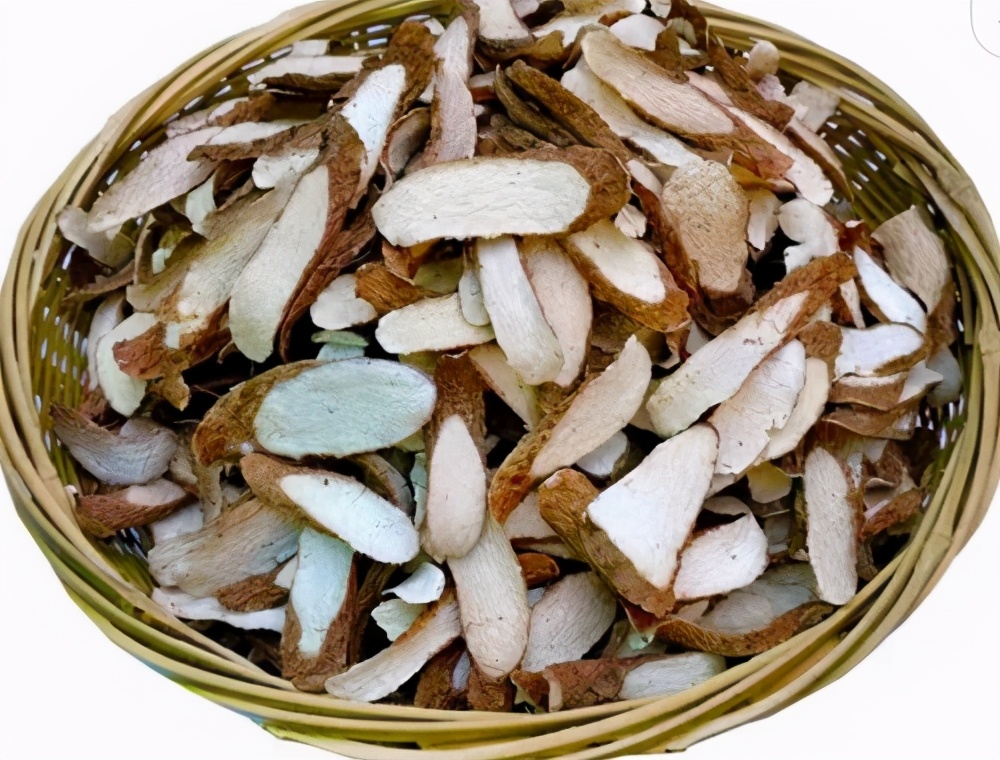
Chinese yam
Liuwei Dihuang Wan is composed of prepared rehmannia root, Chinese yam, cornus fruit, poria, alismatis rhizome, and moutan bark. In ancient times, it was primarily used to treat developmental delays in children due to insufficient kidney yin (such as delayed teething, delayed standing, delayed walking), sparse and yellowish hair, delayed closure of the fontanelle, weak muscles and bones, dry mouth and throat, and heat sensations in the palms and soles. It also has good efficacy in treating symptoms in adults caused by kidney yin deficiency, such as soreness and weakness in the lower back and knees, dizziness and tinnitus, and night sweats.
Legend has it that at that time, the young crown prince suffered from mutism, which the imperial physicians could not cure. Qian Yi, who came from a common background, believed that loose teeth prevented clear speech, so he used this formula to nourish the kidneys and strengthen the teeth. Soon, the crown prince recovered. Many imperial physicians were unconvinced and came to "seek advice," saying: According to Cui Zhiti’s "Eight-Ingredient Shenqi Wan," there should be eight ingredients, but your formula is missing two. Did you forget them? Qian Yi smiled and said, "I didn’t forget. Cui Zhiti’s formula was intended for adults. Children have abundant yang energy, and I believe we can remove the two fire-assisting herbs—cinnamon twig and aconite—to prevent children from experiencing excessive dryness and nosebleeds." Upon hearing this, the physicians were immediately filled with admiration.
Thus, "Liuwei Dihuang Wan" has been passed down to this day. This story illustrates how Qian Yi inherited knowledge from the ancients without being bound by it. Physicians often say that prescribing medicine is like commanding an army. In this case, Qian Yi demonstrated his knowledge and medical skills by diagnosing, treating, and prescribing based on the specific condition, unlike Zhao Kuo, who only theorized about warfare on paper.
Many people believe that Liuwei Dihuang Wan can "tonify the kidneys" and thus "invigorate yang," even using it as a health supplement. In clinical practice, many individuals take it incorrectly due to this misconception, leading to adverse outcomes. The ancients' approach to using tonics involved both supplementing the vital energy, also known as consolidating the foundation and supporting the body's resistance, and eliminating pathogenic factors. Only after expelling the pathogenic factors could the tonics take effect—a combination of supplementation and purgation. This principle is profound, yet later generations failed to understand it, focusing solely on supplementation and inevitably causing harm due to excessive emphasis on tonifying.
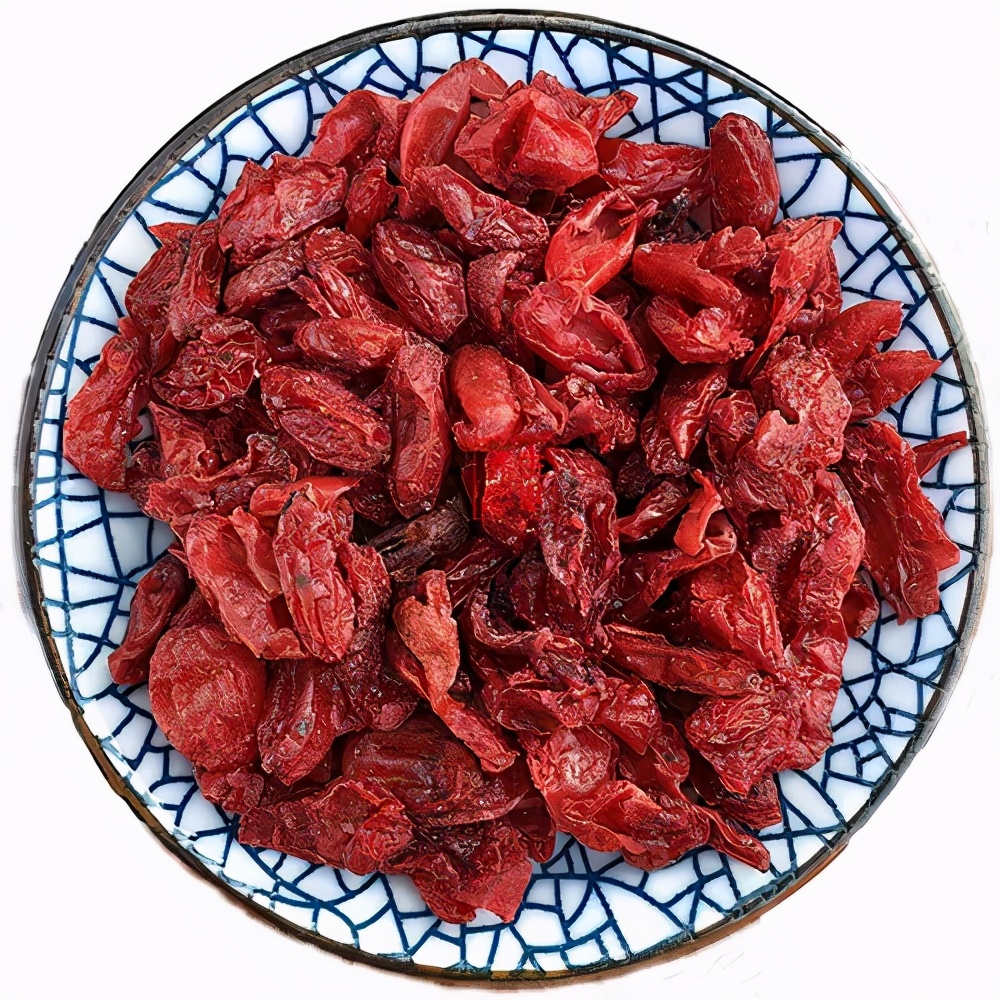
Cornus Fruit
Liuwei Dihuang Wan is a medication, not a tonic. Medications have clear indications, usage, and dosage specifications, and should be selected based on TCM pattern differentiation rather than merely according to symptoms. Even as a medication, Liuwei Dihuang Wan has never been clinically used for "invigorating yang." It was originally used for delayed development in children and is now primarily employed to treat kidney yin deficiency. It can be considered a "yin-invigorating medicine," but it is certainly not an "yang-invigorating medicine." Most individuals with kidney deficiency exhibit symptoms such as back pain and general fatigue.
Liuwei Dihuang Wan is specifically indicated for liver and kidney insufficiency, genuine yin deficiency, and exhaustion of essence and blood. (Here, "essence" broadly refers to the fundamental substances that constitute the human body and sustain life activities. The kidney stores essence, which is the congenital essence; the essence derived from the digestion of food and water, also known as the essence of water and grain, is the acquired essence.) It is also used for emaciation and weakness (referring to a thin and frail body), back pain and leg soreness, spontaneous sweating, night sweats, and phlegm accumulation due to water overflow.
Zhang Zhongjing said, qi deficiency leads to phlegm. (Here, qi deficiency refers to the most fundamental material entity that forms the universe and all things. The sustenance of life entirely depends on qi, which serves as the source of nutrition for all tissue activities and also represents the functional activities of all tissues and organs. Physiologically, it can be roughly categorized into visceral qi, defensive qi, nutrient qi, and ancestral qi. In this context, it refers to a decline in bodily functions.)
Zhu Danxi said, in prolonged illnesses, yin fire rises, and fluids produce phlegm instead of blood. (This refers to the nutrients derived from food and drink through the functions of the stomach, spleen, lungs, and triple energizer, or generally all body fluids and their metabolic products.) It is advisable to tonify the blood to restrain ministerial fire (ministerial fire: lung fire—sovereign fire: heart fire, relatively speaking. Sovereign fire and ministerial fire work together to warm and nourish the viscera, promoting the functional activities of the human body. It is generally believed that the liver, gallbladder, kidneys, and triple energizer all harbor ministerial fire, with its root in the gate of life). The phlegm will naturally be eliminated. Fever and coughing occur when kidney deficiency transfers heat to the lungs, causing coughing. When pressed to the bone, the heat feels scorching to the touch, indicating kidney heat. Dizziness and vertigo: As stated in the "Straightforward Formulary," excessive sexual activity leads to kidney qi failing to return to its origin, resulting in qi deficiency dizziness. This symptom indicates insufficient kidney essence and qi, failing to ascend to nourish the brain, thus causing vertigo. Hemorrhaging, uterine bleeding, or erratic blood flow due to spleen dysfunction in controlling blood lead to blood deficiency dizziness. Symptoms such as tinnitus, deafness, spermatorrhea, bloody stools, wasting thirst, dry tongue, sore throat, deficient fire, toothache, pain in the soles of the feet, and sores in the lower body all arise from insufficient kidney water and flaring deficient fire. Most individuals with kidney deficiency exhibit symptoms such as soreness and pain in the lower back and weakness in the limbs.
Liuwei Dihuang Pills are medication for the Foot-Shaoyin and Jueyin meridians: Shu Di (cooked rehmannia) nourishes yin, tonifies the kidneys, and generates blood and essence; Shan Zhu Yu (cornus fruit) warms the liver to expel wind and astringes essence to consolidate qi; Mu Dan Pi (tree peony bark) drains hidden fire from the monarch and minister phases, cooling the blood and clearing bone-steaming tidal fever; Shan Yao (Chinese yam) clears deficiency heat. This type of weakness refers to fever caused by deficiency and damage of yin, yang, qi, and blood; tonifying the spleen and securing the kidneys can astringe essence; Fu Ling (poria) seeps damp-heat from the spleen to facilitate communication between the kidneys and heart; Ze Xie (alisma) drains water evils from the bladder, thus improving hearing and vision.
Liuwei Dihuang Pills are formulated using the theory of the five elements generating each other and the mother-child relationships among the five zang organs to treat deficiency syndromes of the five zang organs; the principle is to tonify the "mother" in case of deficiency. For example, since the kidney is the "mother" of the liver, in cases of liver deficiency, not only the liver should be tonified, but the kidney must also be supplemented. Another example is when there is deficiency fire in the liver, manifesting symptoms such as insomnia, irritability, flushing heat in the head and face, and a thin, wiry, rapid, and weak pulse. In such cases, the method of "nourishing water to moisten wood" is employed to tonify kidney water and restrain the deficiency fire of the liver.
During the Wanli era of the Ming Dynasty, Zhao Yangkui, the author of *Medical Essentials*, used large doses of Liuwei Dihuang Tang to treat diseases. He stated that even if a patient with typhoid fever complained of thirst—caused by pathogenic heat entering the stomach and depleting body fluids—the immediate administration of Liuwei Dihuang Tang could prevent gastric fluid depletion and ensure sufficient liquid supply for the body’s tissues and organs. For those experiencing such thirst, this formula can be used to replenish fluids, but it should be applied with precision—neither excessively nor inadequately, nor indiscriminately. Specifically, patients with kidney yin deficiency, characterized by a reddish tongue, warm palms and soles, flushed cheeks in the afternoon, and periodic hot flashes, may take Liuwei Dihuang Tang (or Liuwei Dihuang Wan) under medical guidance. In contrast, those with kidney yang deficiency, marked by a pale tongue, cold intolerance, pale complexion, heavy limbs, fatigue, clear and frequent urination, and in some men, issues such as erectile dysfunction or spermatorrhea, are unsuitable for Liuwei Dihuang Wan. Instead, they may take Jinkui Shenqi Wan under a doctor’s supervision.
Besides those with kidney yang deficiency, there are some other people who should also avoid using Liuwei Dihuang Pills. First, individuals with spleen and stomach deficiency-cold should not take them. Spleen and stomach deficiency-cold is mainly characterized by lower back soreness, fear of cold, coldness in the abdomen, and loose stools.
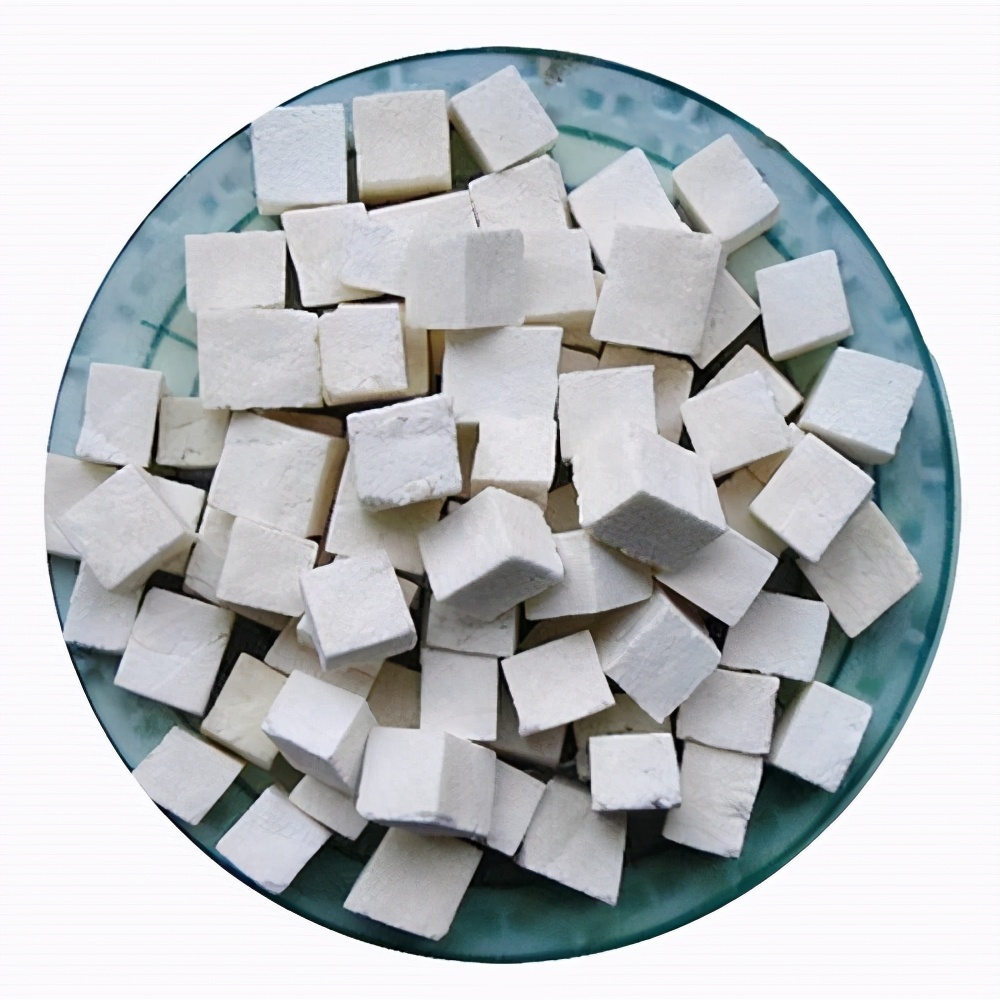
Poria
Liuwei Dihuang Pills contain a high proportion of yin-nourishing herbs, which can increase the burden on the spleen and stomach. Additionally, individuals with damp-heat syndrome should not use it. Symptoms of damp-heat syndrome include bitter taste in the mouth and yellow urine.
The yin-nourishing herbs in Liuwei Dihuang Pills can exacerbate dampness, making it difficult to eliminate damp-heat. Finally, those suffering from a cold should avoid using it. The treatment principle for externally-contracted diseases is "dispersing," while Liuwei Dihuang Pills primarily contain greasy and cloying herbs that focus on "containing." This can cause external pathogenic factors to linger in the body, making the illness harder to cure.
Modern Research and Application: This formula has the effect of nourishing the liver and kidneys. Pharmacological studies indicate that it can enhance cellular immunity, exert anti-tumor effects, reduce blood lipids, prevent atherosclerosis, lower blood pressure, increase resistance to hypoxia, protect kidney function, and lower blood sugar.
It is commonly used in modern times for conditions such as hypertension, diabetes, chronic nephritis, nephrotic syndrome, renal and ureteral stones, chronic renal insufficiency, chyluria, and chronic prostatitis, which are classified as patterns of kidney yin deficiency in traditional Chinese medicine.
Finally, it is important to remind everyone that even individuals with kidney yin deficiency should not take Liuwei Dihuang Pills continuously for an extended period. It is generally recommended to take it for one month and then stop for one week, or take it for one week with a break of one or two days in between, allowing the body to rest appropriately. Additionally, long-term use of Liuwei Dihuang Pills may hinder spleen and stomach function, so it is best to take them 15–20 minutes after a meal.