Liver Tumors, Liver Hemangiomas, and Liver Cysts: What Are the Differences? Lao Hu Tells You About These Conditions
today I will share with friends the symptoms of liver tumors, their names in Traditional Chinese Medicine, as well as methods for syndrome differentiation, disease identification, and medication.
Benign liver tumors are relatively common but typically present no clinical symptoms. Most cases are discovered incidentally through ultrasound or other imaging scans, while others are identified due to hepatomegaly, discomfort in the right upper quadrant, or intra-abdominal bleeding.
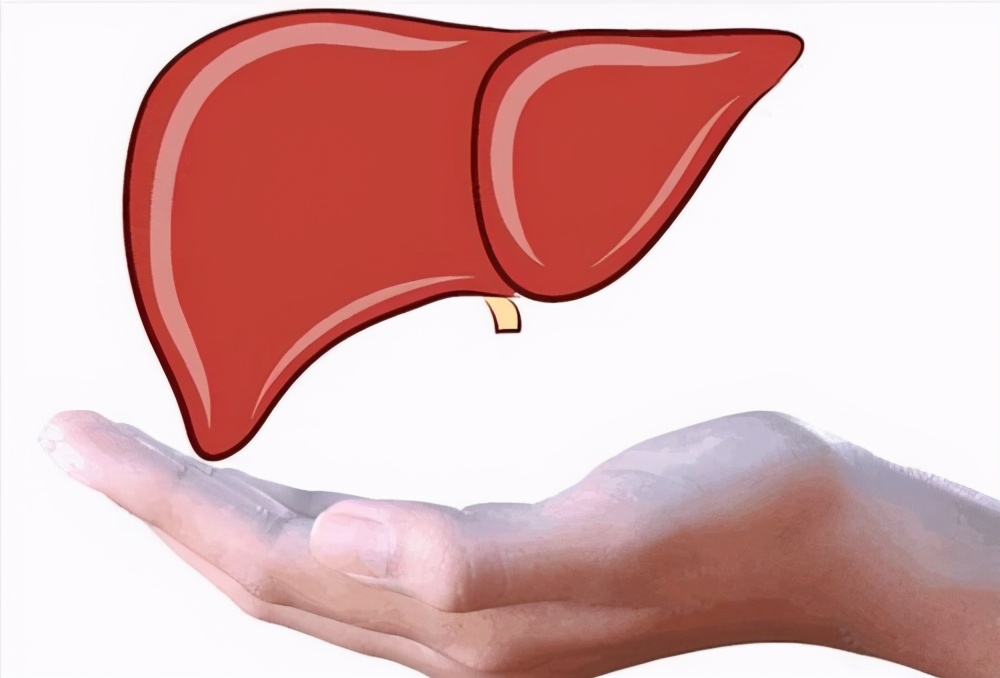
Hepatocellular adenoma is the most important benign liver tumor, primarily seen in women of childbearing age.
Focal nodular hyperplasia is a similar tumor-like localized lesion, whose histological appearance resembles macronodular cirrhosis.
The incidence of asymptomatic small hemangiomas in adults is about 1% to 5%. Characteristic changes can be seen on ultrasound, CT, or MRI examinations, and they are usually single. Liver cysts are not tumors but are often discussed together with benign tumors. They may be incidentally discovered during abdominal ultrasound or CT scans.
What are the symptoms of liver cysts?
In clinical practice, cysts are often classified into solitary hepatic cysts and multiple hepatic cysts based on whether they are single or multiple, and the symptoms differ between solitary and multiple hepatic cysts.
Solitary hepatic cysts typically do not present with any symptoms. Only when the cyst is large enough to compress other tissues do symptoms such as abdominal pain, nausea, and diarrhea occur.
When multiple hepatic cysts grow to a considerable size, they can compress liver cells, leading to atrophic changes and causing phenomena such as bile duct stenosis and cholecystitis, disrupting normal liver function. Ultimately, this can result in ascites, jaundice, and even induce esophageal varices.
Larger hepatic cysts may compress adjacent tissues, leading to corresponding symptoms such as gastrointestinal obstruction and upper abdominal discomfort. Some hepatic cysts can cause hepatomegaly, and a non-painful cystic mass may be palpable in the right upper abdomen.
Treatment of Liver Tumors in Traditional Chinese Medicine
Traditional Chinese medicine and herbal treatment for liver malignancies have no restrictions on the patient's constitution or the severity of the condition. Treatment is based on differentiating the disease and syndrome, making it suitable for any liver cancer patient.
Traditional Chinese Medicine Terminology for Liver Tumors and the Treatment Approach of Syndrome Differentiation and Disease Differentiation in Herbal Medication
In traditional Chinese medical literature, conditions such as abdominal masses, abdominal distension with lumps, deep-lying masses in the abdomen, fatty qi, and chest lumps all fall within the category of accumulations and gatherings.
The ancients believed that accumulations and gatherings arise from deficiency of healthy qi, disharmony of the zang-fu organs, damage to the liver and spleen, qi stagnation and blood stasis, and phlegm turbidity accumulating in the abdomen, leading to a disease primarily characterized by masses or pain or distension in the abdomen. The appearance of plaque-like accumulations in the liver area is precisely due to damage to the liver and spleen, resulting in qi stagnation and blood stasis.
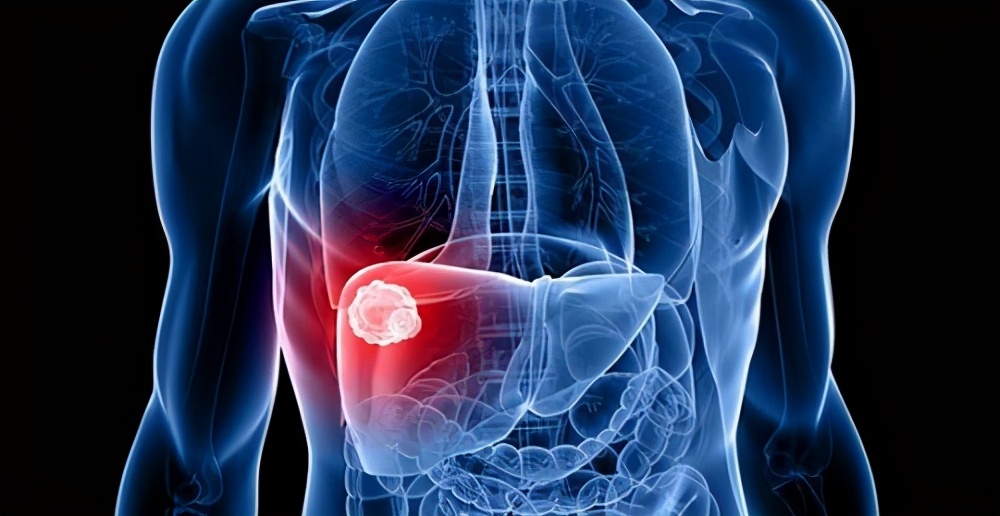
The TCM treatment approach is as follows:
1. Fortify the Spleen and Boost Qi
The disease location of malignant liver tumors is in the liver, but it is closely related to the spleen. The liver belongs to wood and governs free coursing; the spleen belongs to earth and governs transportation and transformation. Physiologically, they mutually support each other; pathologically, they mutually influence each other. Liver wood courses through earth, assisting its transportation and transformation function; spleen earth nourishes wood, supporting its free coursing function. External pathogens interfering, or internal pathogenic factors encumbering the spleen, cause the spleen's transportation and transformation to fail. If the spleen is encumbered for a long time, healthy qi becomes depleted, all leading to spleen qi weakness and impaired spleen transportation and transformation. It is appropriate to select Astragalus root (Huangqi), Codonopsis root (Dangshen), Pseudostellaria root (Taizishen), American ginseng (Xiyangshen), and Licorice root (Gancao) to benefit the stomach and fortify the spleen; Atractylodes rhizome (Baizhu), Chinese yam (Shanyao), Tangerine peel (Chenpi), Pinellia rhizome (Banxia), Polyporus (Zhuling), Poria (Fuling), and Coix seed (Yiyiren) to regulate qi, dry dampness, and fortify the spleen; Amomum fruit (Sharen), Cardamom seed (Kouren), Patchouli (Huoxiang), Perilla stem (Sugeng), Chicken's gizzard lining (Jineijin), and charred Three Immortals (Jiaosanxian) to aromatically awaken the spleen, disperse accumulations, and resolve stagnation, thereby nourishing the postnatal qi and blood.
2. Nourish Yin and Soothe the Liver
Due to liver qi stagnation, leading to impaired blood circulation and poor distribution of body fluids, the liver loses its nourishment; spleen dysfunction impairs the transformation and generation of qi, blood, and body fluids, resulting in inadequate postnatal nourishment; pathogenic factors such as qi stagnation, blood stasis, and damp-heat persist for a long time, transform into fire, and scorch yin blood—all of which easily lead to liver yin deficiency. When yin is deficient, fire becomes hyperactive, liver yin is damaged, wood loses its nourishment, and liver yang becomes hyperactive. Appropriate herbs to select include Asparagus root, Ophiopogon root, Dried Rehmannia root, Polygonatum rhizome, Ligustrum lucidum fruit, Lycium berry, Turtle shell, Soft-shelled turtle shell, Cornus fruit, White peony root, Tribulus fruit, and Oyster shell.
3. Soothing the liver and promoting qi flow
The liver governs free flow and regulation; regardless of what pathogenic factors injure the liver, causing failure of liver qi to circulate freely, liver stagnation, and qi stagnation, it is one of the causes of malignant liver tumors. After malignant liver tumors form, they also affect the free flow of liver qi and the smooth movement of qi. The principle should focus on promoting free flow and regulation, and it is advisable to use herbs such as Saussurea costus, Green Tangerine Peel, Cyperus rhizome, Bitter Orange Peel, Augustina Fruit, Curcuma Root, Sichuan Chinaberry, Finger Citron, and Areca Peel to promote the free flow of liver qi.
How long can someone with malignant liver tumors live at most?
"How long can someone with malignant liver tumors live at most?" is a topic most discussed by patients and their families.
How long someone with late-stage malignant liver tumors can live is mainly related to treatment methods and the patient's proactive attitude.
There has been a long-standing misconception that the course of liver malignancy is very short, only about 6 months. This misunderstanding stems from poor awareness of liver cancer prevention in the past and limitations in diagnostic and treatment capabilities. Liver cancer was often discovered at an advanced stage, so once detected, the survival time was very short, and even treatment could not significantly improve the survival outcomes for patients with liver malignancy.
However, with advances in medicine, increased public awareness of liver malignancy, and improvements in technology, research has found that from the initial settlement and division of liver cancer cells to death from liver malignancy, a conservative estimate is approximately 2 years. This means that from the onset of liver malignancy until death, an untreated liver cancer patient may survive for about 2 years.
In today's increasingly widespread health check-ups, many patients with liver malignancies can be detected early and treated promptly, significantly increasing the five-year survival rate and achieving a higher quality of life. Some patients can even live for decades.
Liver tumor patients should follow a scientifically planned diet
Choose easily digestible, low-fat, and high-protein foods, such as soybeans and soy products, to ensure normal gastrointestinal digestion and absorption.
Therefore, patients need to consume more fresh vegetables and fruits rich in vitamins, as well as foods containing beta-carotene. Beta-carotene can be converted into vitamin A in the body. Patients can also eat more bamboo shoots to aid in bowel movements and detoxification.
Alcohol abstinence: Patients with liver cysts must avoid alcoholic beverages, as alcohol has a particularly significant stimulating effect on the liver. It can stimulate polycystin activity and accelerate cyst growth.

The reason to avoid eating "trigger foods" such as chicken, goose, beef, mutton, dog, fish, shrimp, and crab is that consuming too many high-fat foods can aggravate these symptoms. Therefore, patients with malignant liver tumors should avoid such diets to prevent the synthesis of nitrogen-based metabolites, and instead, they should primarily maintain a light diet.
In summary, patients with liver tumors should pay more attention to their diet, adhere to reasonable dietary adjustments, arrange their meals scientifically, and emphasize dietary care, which will help boost their immunity and improve liver function.