Can Chinese medicine treat lung nodules without surgery? See CT scans as evidence, with proof, evidence, and results.
Traditional Chinese Medicine views lung nodules as masses that are not part of the lung tissue. Since the lung is a reservoir for phlegm, lung nodules arise from qi stagnation and phlegm-dampness causing blood stasis. When stasis, dampness, and congealed phlegm combine, they form masses.
Imaging shows that lung nodules are clearly defined, opaque nodules with a diameter of 3 cm or less, completely surrounded by aerated lung tissue. These are considered benign nodules.
Western medicine views lung nodules as solid substances that cannot be eliminated without surgical removal. After being detected through imaging, for nodules under three centimeters, Western medicine doctors typically advise patients to undergo regular check-ups, with neither preventive measures nor treatment methods available. However, patients often experience symptoms such as chest tightness, coughing, expectoration—sometimes with white frothy or turbid sputum, mucus-like sputum, hard black masses, or yellowish, sticky, thick sputum clots.
Traditional Chinese medicine holds that the spleen governs transportation and transformation, with the four limbs serving as the source for generating qi and blood. When spleen deficiency occurs, the body's transmission and circulation are impaired, depriving the limbs of nourishment. As a result, patients may experience low spirits, general fatigue, reduced appetite, and poor digestion. By identifying the root cause of the condition, an appropriate approach to treatment can be devised.
Today, I would like to share a case that illustrates this situation.
Ms. Ping, 53 years old, had a DR film taken on May 15, 2019, which revealed a nodule in the upper lobe of the right lung.
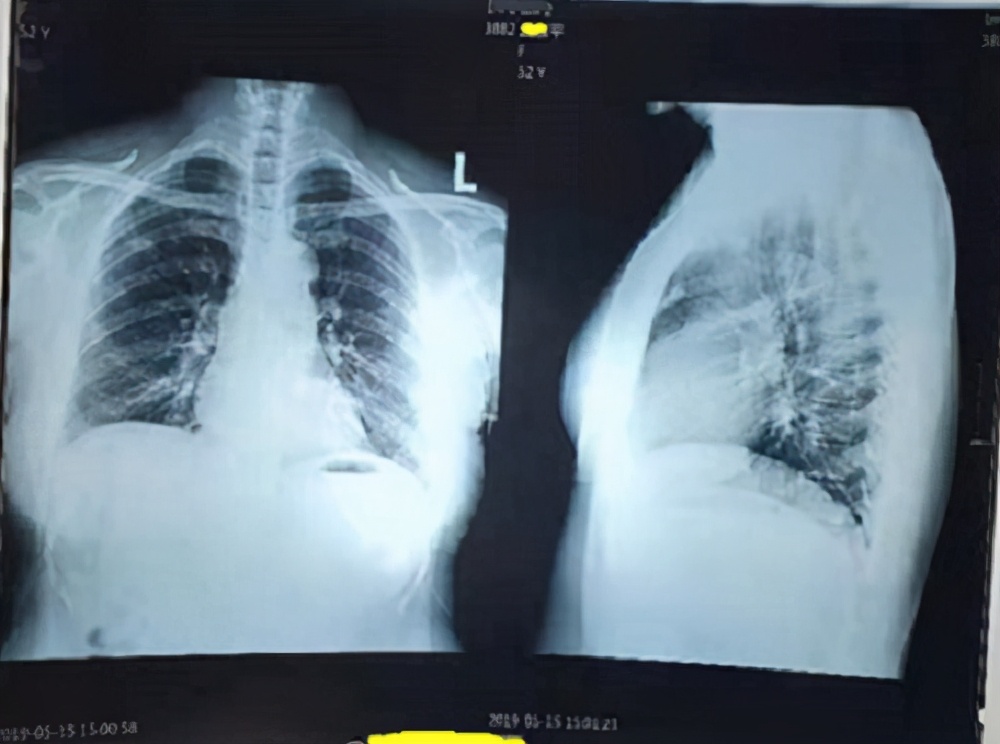
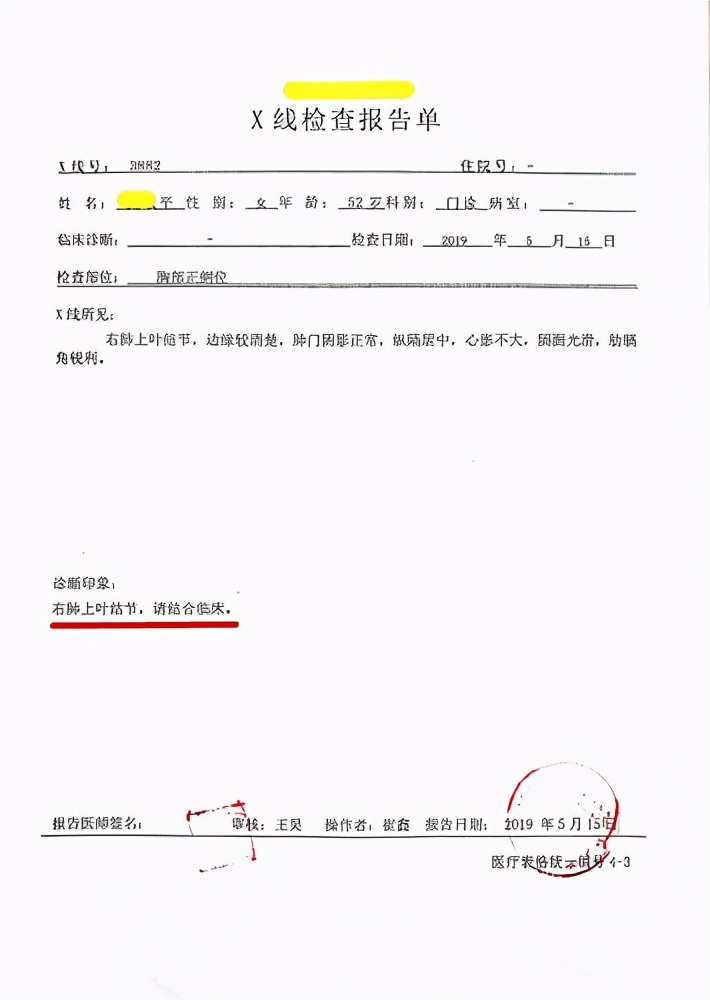
I then prescribed her the traditional Chinese medicine formula for lung nodules that I discussed in my video, which included ingredients like Gallus gallus domesticus (chicken gizzard) and scorched triple digestants to aid digestion and appetite. Four days after taking the medicine, her symptoms of chest tightness, bloating, and discomfort when breathing gradually lessened. After taking the medication for a month, she experienced no symptoms at all, believed she was cured, and thus stopped taking the medicine and did not undergo any follow-up imaging.
By late October 2019, she again experienced some chest tightness and coughing, so she came to see me for a pulse diagnosis.
I advised her to get another X-ray. On October 28, 2019, she underwent another DR scan, with the imaging findings showing a patchy nodular proliferative focus in the right upper lung lobe.
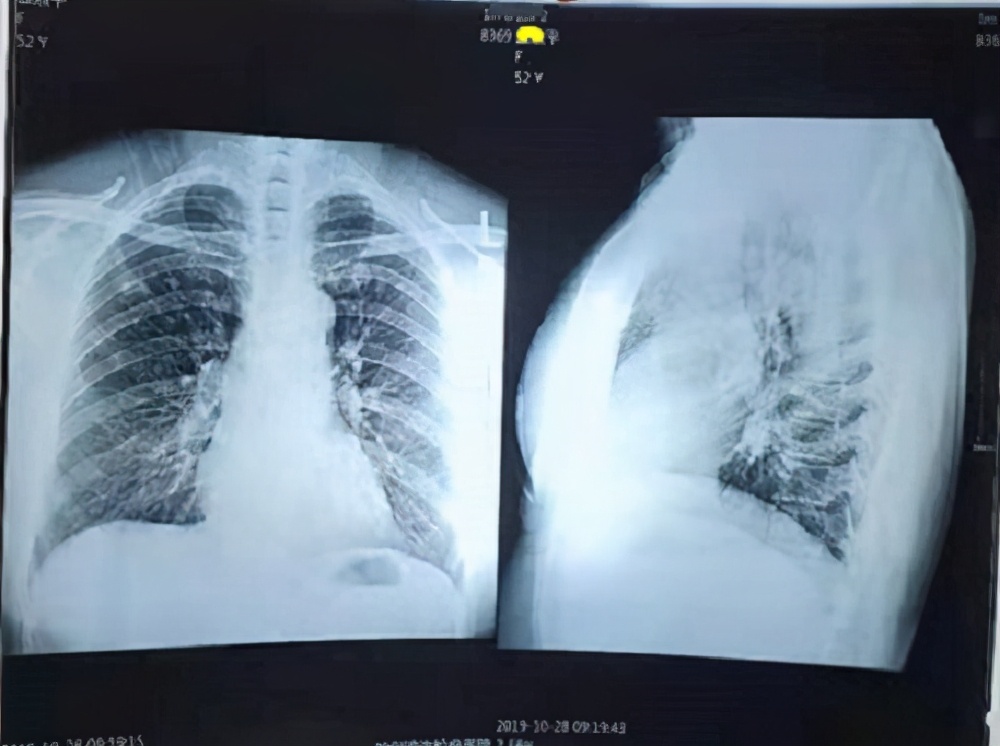
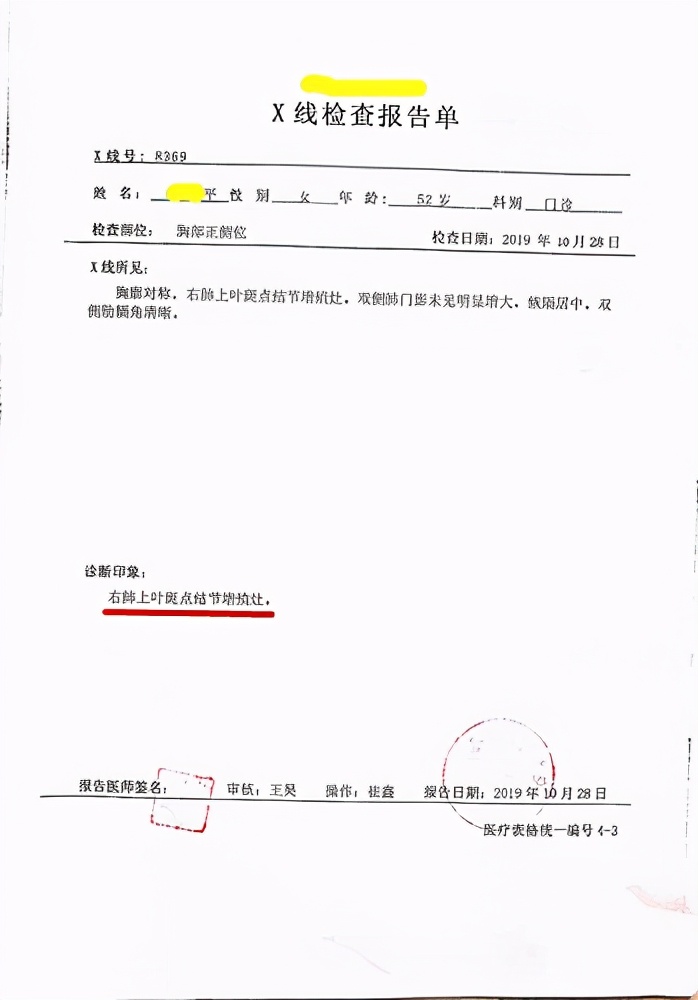
Although she interrupted the medication for four months after taking it for a month, the report on her follow-up imaging showed improvement at the lesion site.
I told her: although her condition has improved, it doesn't mean her disease is completely cured, and she should continue taking the medicine for another three months.
This time, she followed my medical advice and conscientiously took the traditional Chinese medicine I prescribed for her for 100 days. During this period, she happened to encounter the COVID-19 outbreak. She was both afraid of taking nucleic acid tests and worried that others might mistake her for a COVID-19 patient, so she did not go to the hospital for testing. She delayed until October 27, 2020, when she finally went to the hospital for a CT scan. The test report indicated bilateral pleural thickening but did not mention the presence of lung nodules. Based on this, it can be concluded that the lung nodule condition had resolved.
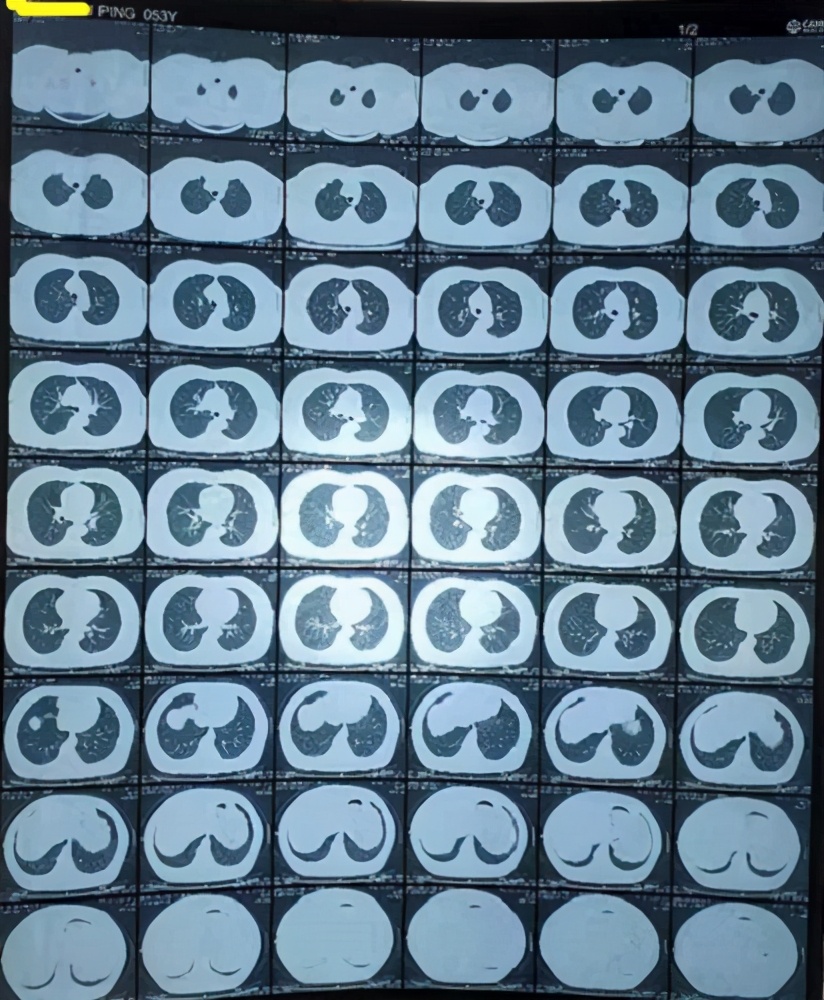
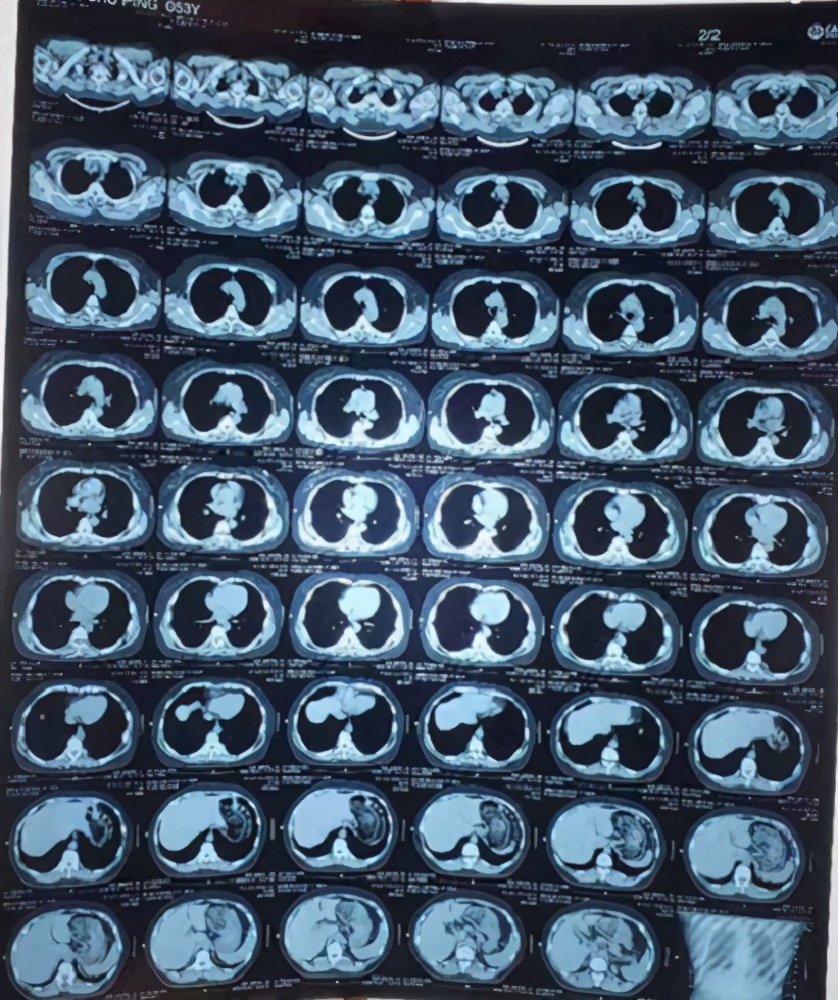
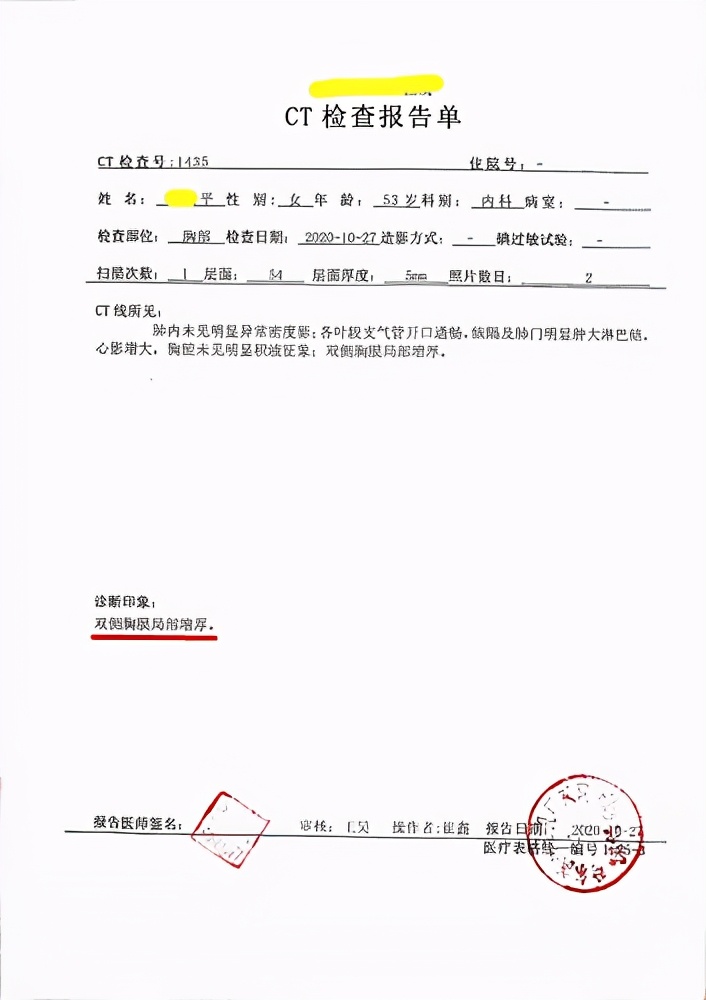
Among the many patients with pulmonary nodules I have treated, there are numerous cases where nodules smaller than one millimeter disappeared after approximately two months of medication. When patients presented the before-and-after CT images to the radiology technicians for comparison, they were often told that the original image showed merely a shadow or a bubble-like artifact at the lesion site—not a true pulmonary nodule. They argued that if it were a genuine pulmonary nodule, it would not disappear, and no medication could make it resolve.
This concept is deeply ingrained in their minds and thinking. Let me give you an example:
When we boil water in a kettle, over time, residue builds up inside—commonly known as scale. What can be done about this scale? Some people will use caustic soda, add water, let it soak for a while, and then the scale will break down.
Caustic soda, also known as sodium hydroxide, is a highly corrosive strong alkali. It typically exists in flake or solid form, easily dissolves in water, and forms an alkaline solution.
Our ancestors recognized long ago: "Where heaven sends disease, earth must grow herbs to overcome it."
The Chinese people have thrived to this day, all relying on the protection provided by China's vast land and abundant resources.
Whether an illness can be cured depends on whether the physician has the skill to differentiate diseases and understand herbal compatibility and application.
A good "mingyi" can solve these problems—by "mingyi," I don't mean famous physicians, but "ming" as in the sun and moon, representing those who understand the true essence of Traditional Chinese Medicine. Famous physicians are social activists, not true doctors.