Known as Alzheimer's disease in Western medicine and referred to as senile dementia in Traditional Chinese Medicine, it is a condition that the elderly should be vigilant about.
Alzheimer's disease (AD), also known as senile dementia, is a degenerative disorder of the central nervous system. It has an insidious onset and follows a chronic progressive course, representing the most common type of dementia in the elderly.
It predominantly affects individuals aged 65 and older.
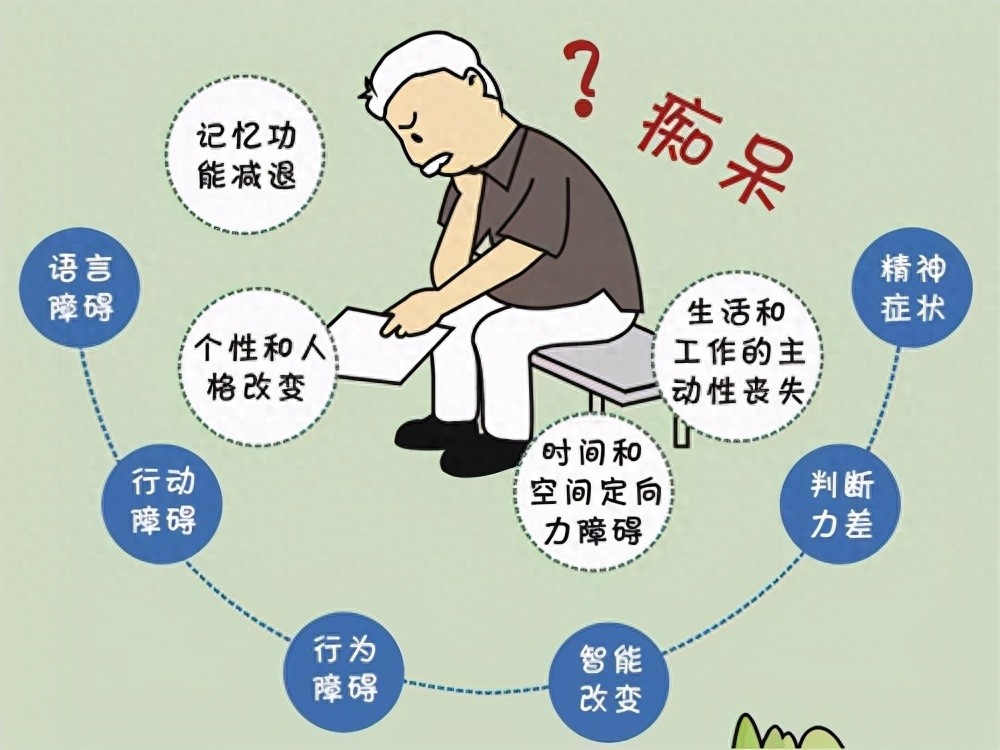
Senile dementia is a condition caused by insufficient blood supply due to cerebral arteriosclerosis, which leads to hypoxia-induced degeneration, atrophy, and necrosis of nerve cells, accompanied by increasing deposition of intracellular brown pigment, resulting in the decline and impairment of neurological functions.
In the early stages of senile dementia, the disease manifests as memory impairment and reduced cognitive function and efficiency. This is followed by disturbances in thought processes and emotions, as well as changes in personality and character, including symptoms such as paranoia, stubbornness, and difficulty concentrating. As the condition progresses, there is an increasing loss of recent memory, eventually leading to the forgetting of remote events. In severe cases, patients may even be unable to recall or recognize their own name, family members, or residence.

Due to memory loss, patients often fabricate facts to fill gaps in their memory. Emotional reactions become blunted, and in some cases, patients may experience self-blame or hypochondriacal delusions. In individual cases, patients may exhibit symptoms such as agitation, restlessness, or euphoric mood.
Currently, Western medicine offers no specific treatment for senile dementia. The primary approach involves supportive care and comprehensive nursing to prevent accidents. Medications that improve cerebral metabolism and enhance brain function may be used, such as piracetam, pyritinol, vitamins with phosphorus supplements, acetylglutamine, and cinnarizine.
If there are destructive behaviors or restlessness and insomnia, sedatives may be administered, such as diazepam, estazolam, chlordiazepoxide, etc.
Traditional Chinese medicine has excellent treatment methods and medications for treating senile dementia. Due to certain restrictions, these cannot be publicly disclosed to benefit these patients.
The above discusses primary-type senile dementia; there is also a traumatic-type senile dementia.
British scientists recently announced that they have achieved a new breakthrough in exploring the causes of senile dementia, linking this disease to severe head injuries.
Researchers from St. Mary's Hospital in London and the Glasgow Institute of Brain Neurology, led by Dr. Garrett Roberts, discovered that individuals with head injuries have abnormal protein aggregates in their brains, similar to the deposits accumulated in the brains of Alzheimer's patients. This amyloid protein is typically absent in the brains of healthy individuals under the age of 60.
In the brains of Alzheimer's patients, the deposition of this protein leads to a gradual loss of memory.
Current research indicates that amyloid protein forms within hours or days after severe head injuries.
For Alzheimer's patients who do not receive proper treatment, nursing care is crucial. Patients should be given extra care and compassion, and practical actions should be taken to alleviate the concerns of elderly individuals.
Strengthen family unity, a harmonious family environment is a powerful medicine for treating this disease and the best care condition for such patients.
Patients who are bedridden for long periods should be guarded against bedsores, pneumonia, urinary tract infections, and other complications.

Pay attention to providing adequate nutrition for the patient and maintaining the balance of water and electrolytes.
Arrange cultural and entertainment activities that patients enjoy, create a relatively pleasant environment for them, so that patients with senile dementia can also enjoy their later years.