Always Waking Up Between 3-5 AM Is Either Due to Excessive Lung Heat or Lung Qi Deficiency, Remember These 2 Prescriptions
Do you have friends like this around you, or are you like this yourself: no matter what time you go to bed at night, once it hits 3 to 5 in the morning, your eyes "automatically" open, as if you’ve set an alarm, and trying to fall back asleep is harder than climbing to the sky.
Many people think this is "neurasthenia" or simply attribute it to "just not sleeping well." But from the perspective of Traditional Chinese Medicine, this is not accidental; it is likely your body sending you health signals through specific time points.

Why is it specifically between 3-5 AM?
According to ancient wisdom, the human body follows a "Qi and Blood Activity Schedule" known as the "Midnight-Midday Ebb-Flow." Simply put, the body's qi and blood circulate through the twelve meridians over the course of twelve two-hour periods in a day. The time between 3 AM and 5 AM (the Yin hour) is precisely when qi and blood flow vigorously into the "Lung Meridian."
The lungs, acting as the "prime minister" of our body, assist the "monarch" (the heart), govern the body's overall qi, and regulate respiration and fluid metabolism. When it is the Lung Meridian's turn to be active, if the lung's function is compromised—whether it is overactive (with fire) or too weak (lack of strength)—it will become particularly pronounced at this time, disturbing the mind and "waking" you from sleep.

Therefore, even though both result in early waking, the underlying causes can be entirely different. At the very least, we can start by distinguishing between the two most common scenarios:
First Situation: Excess Pattern - Excessive Fire Qi, Restlessness and Difficulty Sleeping
If you wake up between 3-5 AM and feel inexplicably restless, tossing and turning and unable to fall back asleep, with a sense of a nameless fire raging in your chest, it's likely due to "excessive Lung fire."
Individuals with this pattern often also experience the following manifestations:
Dry, sore throat, constantly wanting to drink water, but drinking doesn't relieve the thirst.
Prone to dry coughing with scanty, sticky phlegm, or no phlegm at all.
Dry mouth and nasal dryness, and even waking up to nosebleeds in the morning.
Where does this "fire" come from? Most likely, it arises from long-term work-related stress, unresolved emotional issues, or a preference for spicy and greasy foods. These factors cause stagnation of lung qi, which over time transforms into fire. This "pathogenic fire" rises upward, disturbing the "spirit" peacefully residing in the heart. When the spirit is unsettled, sleep becomes restless, naturally "rousing" you awake.
Approach to regulation: This situation is akin to a pot of water boiling too fiercely—what's needed is to "remove the firewood from under the cauldron." The key to regulation lies in "clearing the lungs and draining the fire," reducing this excess heat. You can refer to ready-made formulas such as Qingfei Yihuo Wan (Lung-Clearing and Fire-Reducing Pills), which work to help the lungs "extinguish the fire," allowing the spirit to regain its tranquility.
The Second Scenario: Deficiency Pattern — Insufficient Qi Strength, More Exhausted, More Awake
If upon waking, you don't feel irritable, but you just feel very fatigued, as if your body has been emptied out. You want to sleep but simply can't rest properly, and you have especially many dreams, feeling more exhausted upon waking the next day than before you slept. Then this likely belongs to "Lung Qi Deficiency".
These types of individuals often exhibit the following characteristics in daily life:
Feeling fatigued during the day, always wanting to doze off, and speaking with weak breath.
Frequent spontaneous sweating and shortness of breath even after minimal activity.
Poor resistance, prone to catching colds and coughing as soon as the weather changes.
Why is this? "The lungs govern Qi," and lung Qi is the fundamental source of all Qi in the body. When lung Qi is too deficient, the "engine" driving Qi and blood circulation lacks sufficient power. The mind and spirit, unable to receive adequate nourishment from Qi and blood, function like a phone with low battery—though not shut down, it remains in a state of "low-power anxiety," naturally feeling unsettled and prone to waking up early.
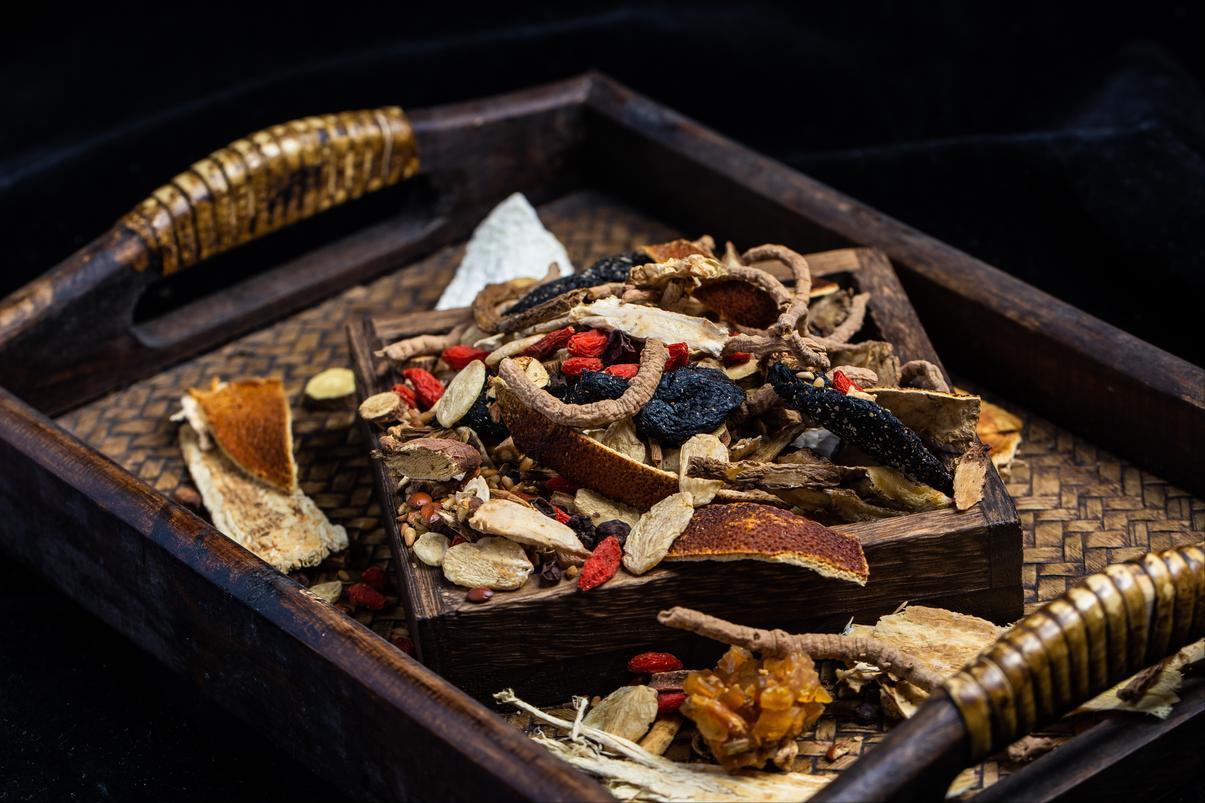
Treatment approach: This situation is akin to a phone with a dead battery—you need to charge it rather than clear the background apps. The core of the treatment is to "tonify lung qi and nourish sufficient qi and blood." You may consider classic formula concepts, such as **Bǔ Fèi Tāng (补肺汤, Lung-Tonifying Decoction)**, which is specifically designed to "refuel and boost" the lungs. If symptoms of overall qi and blood deficiency are more prominent, then the approach of **Bā Zhēn Tāng (八珍汤, Eight-Ingredient Decoction)** is more suitable, as it "dual-tonifies qi and blood," laying a solid foundation for the body.
A final reminder:
In summary, waking up between 3-5 AM is driven by the interplay of "deficiency" and "excess" in the body. One scenario involves an "excess" of energy that needs to be cleared downward; the other involves a "deficiency" of energy that requires internal supplementation.
Of course, individual constitutions vary widely, and specific conditions must be assessed in conjunction with overall systemic symptoms. If you are persistently troubled by this issue, the best approach is to consult a professional TCM practitioner for pattern differentiation and tailored treatment. This ensures both safety and effectiveness, allowing you to enjoy restful sleep.