Spleen deficiency can be divided into two types: one is the Fuzi Lizhong Wan (Aconite Center-Regulating Pill) type, and the other is the Sijunzi Wan (Four Gentlemen Pill) type.
Many people feel that they have spleen deficiency, but “spleen deficiency” is actually a broad concept. In Traditional Chinese Medicine (TCM), the spleen is like the “logistics minister” of our body, responsible for converting the food we eat into energy we can use (i.e., qi and blood). If this “minister” becomes tired or ill, various problems may arise.
The two most common conditions are “spleen yang deficiency” and “spleen qi deficiency.” Their symptoms differ, and the approaches to treatment and the Chinese patent medicines used are also completely different. Today, we will clarify these two conditions.
1. Spleen-Yang Deficiency of "Insufficient Firepower" – The Main Indication for Fuzi Lizhong Wan
What is Spleen-Yang Deficiency?
Spleen-Yang can be understood as the "little sun" in the spleen and stomach, responsible for warming and "ripening" food. If this "little sun" has insufficient firepower, the spleen and stomach will become cold and sluggish.
How would you feel?
Particularly sensitive to cold: It's not just about consuming cold foods; even a slight drop in the weather can cause discomfort in the stomach, with rumbling sounds and even direct diarrhea.
Loose stools: The stool may contain undigested food, which in traditional Chinese medicine is referred to as "undigested grains."
Preference for warmth in the abdomen: Drinking hot water or using a hot water bottle on the stomach provides significant relief, while exposure to cold leads to discomfort. Additionally, the hands and feet are often cold.
This situation is typical of spleen-stomach deficiency with cold. In such cases, Aconite Pill for Regulating the Middle Burner comes into play.
Its formula consists of: Aconite, Dried Ginger, Ginseng, Atractylodes, and Honey-fried Licorice. Aconite and Dried Ginger are two key ingredients—one powerfully tonifies yang energy, while the other warms the middle and dispels cold, akin to adding firewood to a dying stove. Meanwhile, Ginseng, Atractylodes, and Honey-fried Licorice work to replenish spleen energy and strengthen the defense. Thus, Aconite Center-Regulating Pill addresses both yang deficiency and spleen deficiency simultaneously, invigorating and warming the spleen and stomach to restore their proper function.
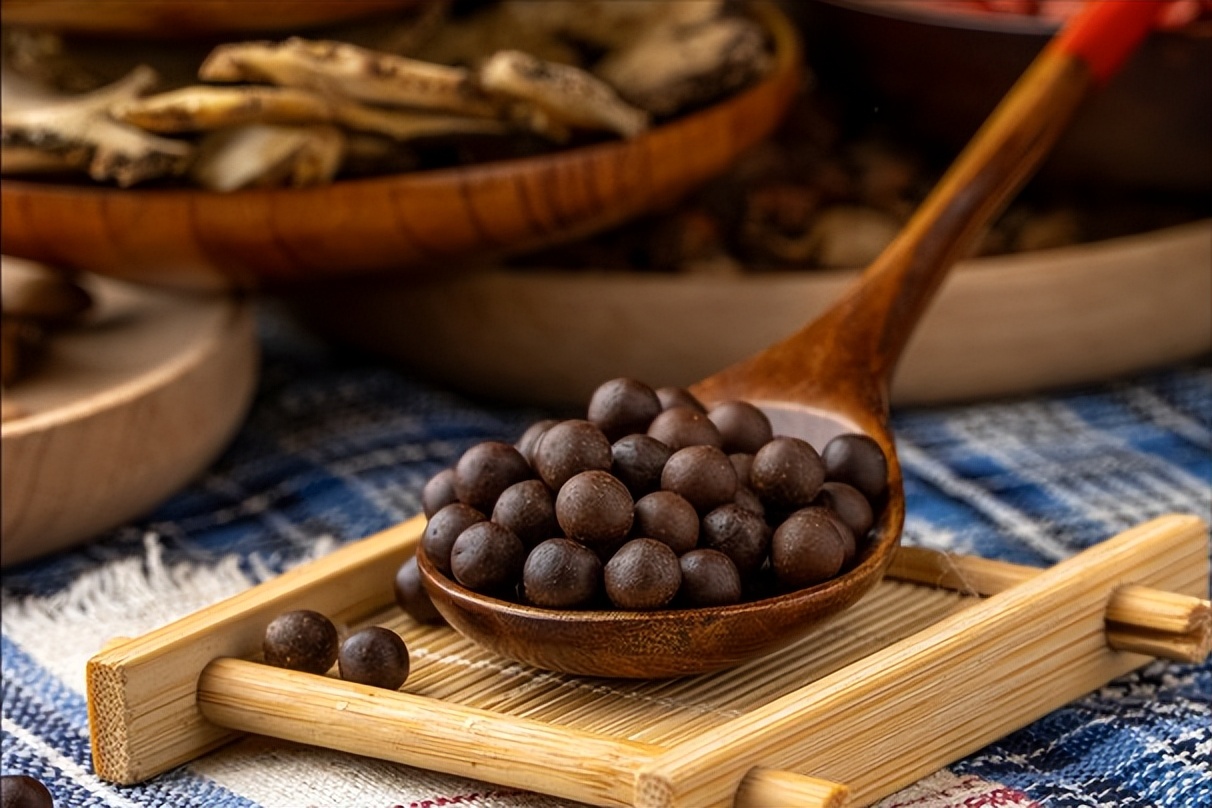
2. Spleen Deficiency with "Insufficient Motility"—The Specialty of Four Gentlemen Pill
What is spleen deficiency?
If spleen yang deficiency is like "insufficient firepower," then spleen deficiency is akin to "insufficient horsepower." Spleen energy is the driving force that propels food digestion and transportation. When this driving force weakens, ingested food tends to stagnate in the stomach, lacking the energy to move downward.
Food feels stuck after eating: You experience significant discomfort with abdominal bloating after meals, feeling as if food takes a long time to digest—a condition in Traditional Chinese Medicine called "postprandial abdominal distension."
Lethargy and weak voice: Because food is not efficiently converted into energy, you often feel sluggish and lacking in vigor. Your complexion may appear sallow and dull.
May be accompanied by bad breath: When food stagnates in the stomach for an extended period, it can ferment and produce unpleasant odors, leading to belching with a sour or rotten smell and halitosis.
At this point, it's time for Sijunzi Wan.
Its formula is very classic: Codonopsis pilosula (or Ginseng), Poria cocos, Atractylodes macrocephala, and roasted licorice. Codonopsis pilosula and Atractylodes macrocephala are the main components, one tonifying qi and the other fortifying the spleen, adding "motivation" to the spleen and stomach. The role of Poria cocos is quite ingenious; it can expel the "dampness" generated due to poor transportation and transformation through urination, making the spleen and stomach environment more refreshing. Roasted licorice is responsible for harmonizing the properties of the herbs, ensuring they all work well together. The entire formula focuses on fortifying the spleen and tonifying qi, allowing the "motor" of the spleen and stomach to spin vigorously again.
Brief summary
Feeling cold, having diarrhea after eating cold food, and preferring warmth on the abdomen, with the emphasis on "cold," consider Fuzi Lizhong Wan.
Eating little but feeling bloated, lacking energy, and having a yellow complexion, with the emphasis on "obstruction" and "fatigue," consider Sijunzi Wan.
Final reminder: Traditional Chinese medicine emphasizes syndrome differentiation and treatment, and each person’s condition may be more complex. For example, some people may have both cold and dampness. If you cannot distinguish clearly or if the medication does not work well, it is best to consult a professional TCM practitioner and let the doctor diagnose and differentiate the syndrome through pulse diagnosis. This is the safest approach.