The best medicine in the world is Yang Qi, here's a simple trick to replenish it
Do you often experience this?
Feeling cold even in the middle of summer, with hands and feet always ice-cold?
Feeling like you're wearing wet clothes, heavy and lacking strength, with a foggy head?
Is your tongue swollen, with teeth marks on the edges?
Do your lower back, shoulders, or legs and feet often ache here and there, feeling uncomfortable all over?
Feeling low on energy all day, unable to muster enthusiasm for anything?

If you've checked several of the above symptoms, from the perspective of traditional Chinese medicine, this is likely a manifestation of insufficient yang qi in the body and an excess of cold-dampness. Traditional Chinese medicine holds that yang qi is like the body's "little sun," responsible for warming the whole body, promoting the circulation of qi and blood, and defending against external pathogens (cold-dampness). When yang qi is weak, the body becomes prone to cold intolerance, difficulty expelling dampness, and poor circulation of qi and blood, naturally leading to the discomfort mentioned above.
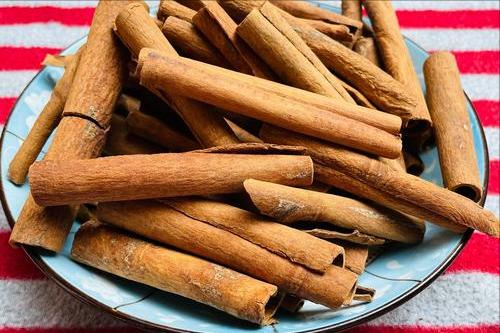
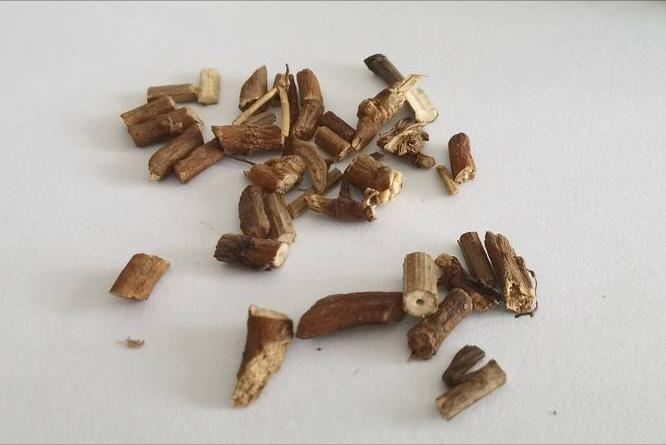
Share a simple formula: Cinnamon + Bupleurum Root steeped in water
Method: Take 3 grams of cinnamon + 5 grams of Bupleurum Root, steep in boiling water for about 10 minutes, and drink it as tea.
Why choose these two herbs?
Cinnamon: It is an "expert" at warming and supplementing yang qi, especially skilled at warming the kidneys, spleen, and stomach. Traditional Chinese Medicine states it can "tonify fire to support yang," "disperse cold to relieve pain," and "warm and unblock the meridians." Simply put, it can add a "small fire" to the body, dispel cold qi, make the flow of qi and blood smoother, and is particularly effective for cold pain in the lower back and knees, and cold hands and feet.
Bupleurum Root: Its main functions are "lifting yang qi" and "soothing the liver to relieve stagnation." When yang qi is insufficient, it sometimes "sinks," and Bupleurum Root can help lift and raise the yang qi, distributing it to where it needs to go. At the same time, it can also regulate the body's qi movement, making the energy pathways more open. The combination of the two sees cinnamon responsible for "warming and supplementing," while Bupleurum Root is responsible for "lifting" and "unblocking," supplementing yang without easily causing excessive heat.
A real-life example:
Aunt Wang, 45 years old, an office clerk. She had cold hands and feet all year round, couldn't even bear air conditioning in summer, and always felt a chill in her back. She was particularly prone to fatigue, felt drowsy in the afternoon, had stiff and sore shoulders and neck, and her tongue was swollen with teeth marks. After consulting a Traditional Chinese Medicine practitioner, the doctor said she was a typical case of "spleen and kidney yang deficiency with internal retention of cold-dampness." Besides advising her to keep warm and exercise appropriately, the doctor also suggested she try this cinnamon and Bupleurum Root tea (along with other adjustments). After persisting for almost a month, Aunt Wang felt her hands and feet were much warmer, she was less afraid of cold, her afternoon energy improved somewhat, and her shoulder pain also eased. She exclaimed, "I never thought just two little herbs brewed in water could really warm me up!"
Important reminder:
This small tea recipe is suitable for people like Aunt Wang who have yang deficiency with fear of cold, cold hands and feet, and cold pain in the lower back and knees. However, each person's constitution is different, and the degree of cold-dampness varies. If the symptoms are relatively severe, or if you feel uncomfortable after drinking it, it's best to consult a professional TCM physician. Getting a clear diagnosis before regulating your body is more reliable. There are many health preservation methods; the one that suits you is the best!