To Ensure Ample Kidney Essence, Don't Forget to Tonify Qi and Blood—A Small Formula to Replenish the Essence, Qi, and Blood of the Whole Body
Our ancestors said, "Essence and blood share the same source, and Qi generates and nourishes blood." This statement holds a lot of truth even today. Have you ever noticed that some people find kidney-tonifying herbs effective initially, but as soon as they stop taking them, they revert to their original state? It's like adding water to a leaking bucket. If you only pour in water without patching the leak, it will never hold. In fact, kidney essence and qi and blood are like three strands of rope twisted into a braid; if one strand is missing, the whole thing loses its strength. Today, I'll teach you an old formula. It uses just three common herbs to tonify essence, qi, and blood all at once.
The first herb is Psoralea corylifolia. This herb is indeed an "old hand" in the field of tonifying the kidneys. Traditional Chinese Medicine (TCM) holds that "the kidneys govern the bones and generate marrow." Insufficiency of kidney yang is like a weak fire in a stove. Psoralea corylifolia acts like adding coal to the furnace, making the fire of the gate of vitality (Mingmen) burn strong and bright. It is especially suitable for those who experience cold hands and feet in winter, weakness in the waist and legs, and lack of energy when walking. Some elderly people suffer from osteoporosis, which TCM attributes to kidney essence deficiency leading to emptiness of the bone marrow. Psoralea corylifolia can help replenish and fill the bone marrow. However, it is important to note that this herb has a warming nature. Those prone to excessive internal heat should use it in combination with other herbs.
The second ingredient is Poria cocos. Despite its pale and pristine appearance resembling a block of tofu, its ability to tonify qi is remarkable. In Traditional Chinese Medicine (TCM), it is said that "the spleen is the source of qi and blood production." The spleen and stomach are like the household rice jar, and Poria cocos can patch up any holes in the jar while also increasing its capacity. For those who feel drowsy after meals, lack energy when speaking, or have a sallow complexion, it is often a sign of spleen deficiency and insufficient qi. Combining Poria cocos with Chinese yam and Atractylodes macrocephala is like installing a water pump for the spleen and stomach, naturally boosting qi and blood.
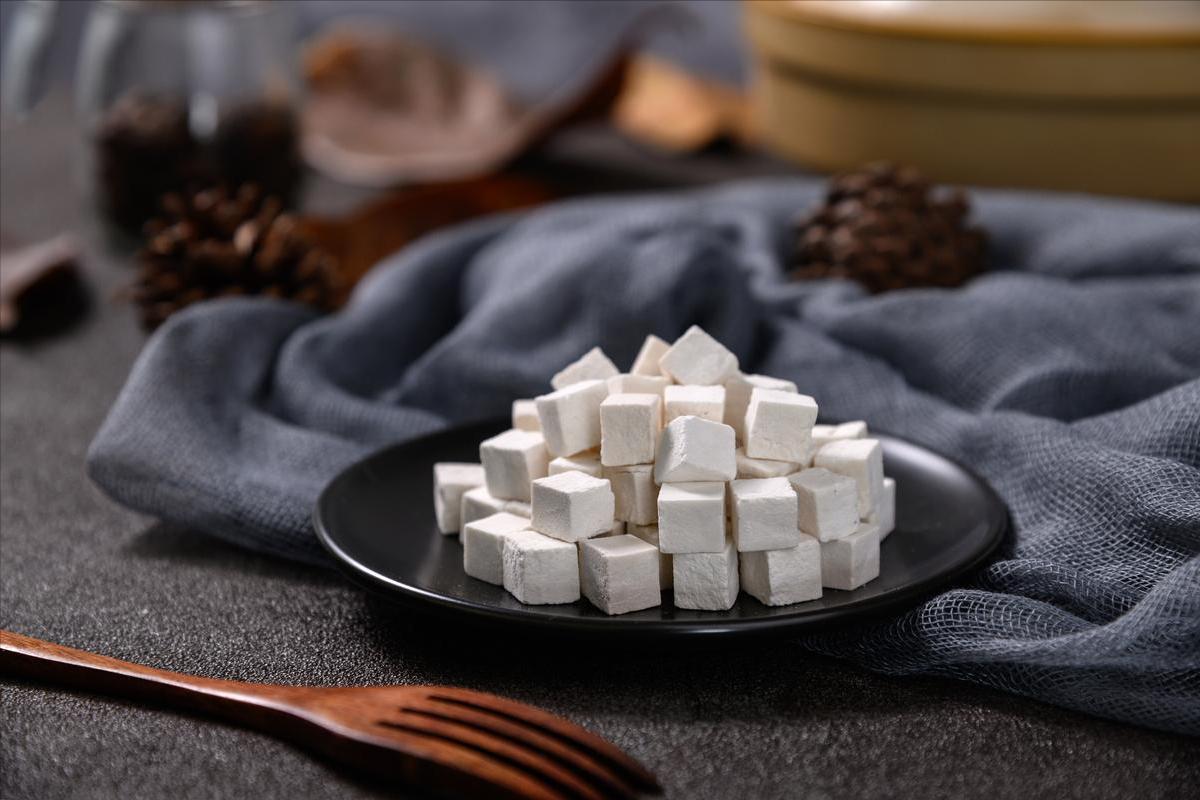
The third ingredient is myrrh. This herb is regarded as a "scavenger" in the realm of promoting blood circulation. When the flow of qi and blood is obstructed, it’s like a traffic jam in a city, and myrrh helps clear the congested pathways. This is particularly beneficial for women with symptoms such as scanty menstrual flow, dark-colored menstruation, or a tendency to bruise easily—all signs of blood stasis. Combining myrrh with Chinese angelica and Chuanxiong rhizome allows qi and blood to flow like running water. However, it should be used with caution by pregnant women and those with heavy menstrual flow.
When these three herbs are combined, they act like a "three-cylinder engine" for the body: Psoralea corylifolia manages kidney essence, Poria cocos supports spleen qi, and myrrh regulates qi and blood. This combination is especially suitable for individuals who feel both cold and fatigued, have a pale complexion, and are prone to developing spots. However, it’s important to note that TCM emphasizes syndrome differentiation and treatment, so it’s best to consult a TCM practitioner for a proper diagnosis before use. In daily life, you can also brew a Five Red Soup (made with red dates, red beans, red-skinned peanuts, wolfberries, and brown sugar) as a tea. Combined with early bedtime, waking up early, and moderate exercise, essence, qi, and blood will gradually be replenished. Remember, nurturing health is like farming—it requires daily watering and fertilizing. Don’t expect to rely on a couple of herbal prescriptions for a permanent solution!