The essence of liver qi stagnation is actually lung qi failing to descend. Zhang Zhongjing's Ophiopogon Decoction is a hundred times more effective than simply soothing the liver.
Do you also suffer from this problem: a constant feeling of a heavy stone pressing on your chest, frequent sighing, distending pain in the rib areas on both sides, and a temper that has become like a firecracker, easily ignited? Many people's first thought is "liver qi stagnation," and they quickly turn to Xiaoyao Pills or Chaihu Shugan Powder for relief, feeling much better after a while. However, once they stop the medication, the old problems return intact before long.
Why is this? Could the approach of soothing the liver be wrong?
The line of thinking is correct, but perhaps the true "root of the illness" hasn't been identified. In traditional Chinese medicine (TCM), our internal organs are not isolated entities acting independently; rather, they are an interconnected family that influences and constrains one another. For liver qi to flow smoothly and freely, relying on itself alone is insufficient—it also requires a "leader" to oversee it.

Who is this "leader"? It is our lungs.
I. Why is it said that "the lungs govern the liver"?
In TCM's five-element theory, the liver belongs to wood, whose nature is to grow upward and outward, full of vitality like a small tree in spring. The lungs, on the other hand, belong to metal, and metal can restrain wood. Just as an axe can prune the branches of a tree to help it grow more beautifully rather than wildly and uncontrollably.
This kind of "restraint" is not bullying, but a benign form of management and control. One of the main functions of lung qi is "diffusion and descending," simply put, it involves smoothly directing qi downward and distributing it throughout the body. When the lungs, as the "chief manager," function normally and qi flows smoothly from top to bottom, even if liver wood tries to "generate fire" or "become stagnant," it is restrained by this descending force, thus maintaining balance.
Conversely, if the lungs themselves encounter problems—such as due to chronic sleep deprivation, excessive worry, or exposure to dryness—leading to lung yin deficiency and impaired lung qi descent, they become "unable to protect themselves," let alone manage liver wood. When the "leader" upstairs loses control, the liver wood downstairs naturally becomes prone to "rebellion," leading to issues like liver qi stagnation and liver fire flaring upward.
2. Only Focusing on Soothing the Liver, Without Nourishing the Lungs, Merely Addresses Symptoms, Not the Root Cause
Nowadays, many people, upon seeing signs of liver stagnation or fire flaring, tend to use bitter and cold herbs to clear liver fire. This is akin to seeing a crooked branch and, instead of thinking about how to straighten it, simply chopping it off with an axe.
Doing so may appear effective in the short term, as the internal heat seems to subside. However, cold and cooling medications can easily damage the body's yang energy, especially lung qi. When lung qi is already weak, this only exacerbates the condition, further weakening its ability to restrain liver wood. As a result, the root cause of liver depression—the failure of lung qi to descend—not only remains unresolved but may even worsen, leading to a cycle of recurring symptoms.
Faced with this stubborn type of liver depression, the Medical Sage Zhang Zhongjing offered a timeless wisdom spanning millennia in the "Synopsis of the Golden Chamber"—Ophiopogon Decoction.
Look at this formula: Ophiopogon root, Ginseng, Pinellia tuber, Licorice root, Rice, and Jujube. Not a single herb directly "soothes the liver." Its core principle is "strengthen the earth (spleen) to generate metal (lung), and nourish water (kidney) to nourish wood (liver)."
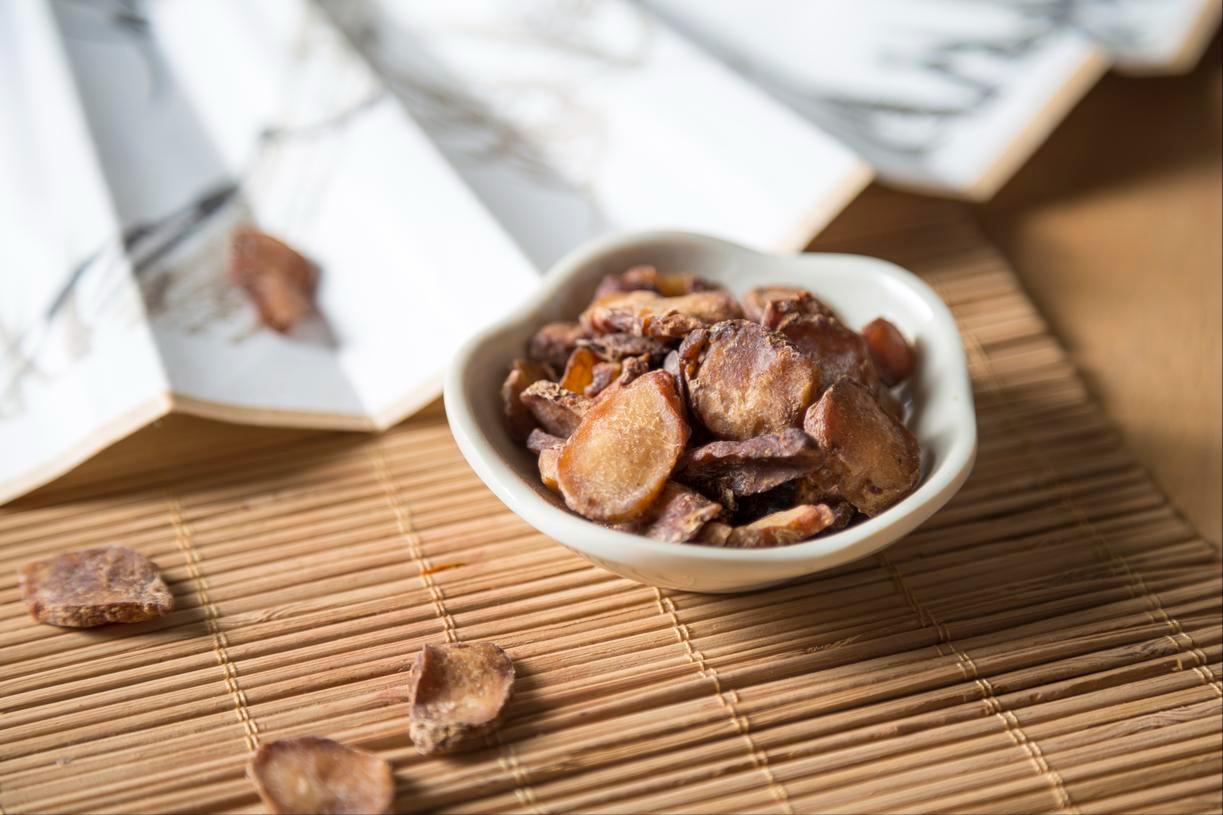
Ophiopogon japonicus, with its sweet, moistening, and slightly cold nature, serves as the primary herb for nourishing lung yin and moisturizing lung dryness, akin to "hydrating and moisturizing" the dry lungs to restore their moistness.
Ginseng, licorice, japonica rice, and jujube are all sweet and warm-moistening, functioning to tonify middle qi, particularly lung qi. With the nourishing of yin fluids (Ophiopogon japonicus) and the supplementation of energy (ginseng, etc.), the lungs naturally strengthen and restore their normal "descending and purifying" function.
Pinellia ternata is ingeniously utilized here, as it can redirect rebellious qi downward and resolve phlegm turbidity, acting like "clearing obstacles" from the pathway for lung qi descent, ensuring the smooth downward movement of qi.
The formula appears to be tonifying and moistening the lungs, but in reality, when lung qi is adequately nourished and can smoothly descend, it's like "smoothing the fur" of an overexcited liver wood—the liver qi naturally becomes relaxed and balanced. This method of gently calming liver wood by nourishing lung yin addresses the problem at its root. It is far more sophisticated and produces longer-lasting effects than simply suppressing liver qi.
Final Reminder:
Of course, traditional Chinese medicine emphasizes syndrome differentiation and treatment tailored to the individual. Ophiopogon Decoction primarily targets liver qi stagnation caused by lung yin deficiency and deficiency fire flaming upward. In addition to symptoms of liver depression, typical manifestations may include dry cough without phlegm, dry mouth and throat, and heat in the palms and soles. If you are unsure about your condition, the best approach is to consult a professional TCM practitioner. Do not apply the prescription on your own.