Take Buzhong Yiqi Pills in the morning, Xiaoyao Pills at noon, and Guipi Pills at night to raise yang, strengthen the spleen, and balance qi and blood
Many of you have put considerable effort into nourishing your qi and blood, but the results are often unsatisfactory. Some feel as if they haven't supplemented at all, with no visible improvement in qi and blood. Others experience excessive internal heat after supplementation, manifesting as mouth ulcers or facial acne. There are also those who only focus on regulating qi without proper nourishment, eventually leading to deficiency in both qi and blood, leaving them feeling weak and lacking vitality. Don't worry. Today, I will teach you a method to nourish your body by following the daily rhythm of qi and blood circulation, making supplementation easier and more effective.
Let's talk about the morning first. When the sun rises in the morning, the natural qi begins to ascend, and our bodies should follow this rhythm. Traditional Chinese Medicine emphasizes the concept of "harmony between humans and nature," which aligns with this principle. During this time, those with spleen deficiency, fatigue, or constant low energy may consider taking Buzhong Yiqi Pills. These pills act like a boost for the spleen and stomach, helping to raise yang and strengthen the spleen, thereby enhancing the body's middle qi. When middle qi is sufficient and spleen-stomach function improves, the food we consume can be better digested, absorbed, and transformed into qi and blood, providing energy for the body. It’s akin to adding high-quality fuel to a machine—it naturally runs more smoothly.
Let's talk about noon. After lunch, yang qi is at its peak. Nowadays, many people face high levels of stress, and liver qi stagnation is particularly common. Many individuals feel down all day, frequently sigh, and experience a sense of fullness or pain around their ribs. In traditional Chinese medicine, this is referred to as liver qi stagnation. The liver governs dispersion and is responsible for regulating the flow of qi throughout the body. When liver qi is not flowing smoothly, the movement of qi is obstructed, which in turn affects the circulation of blood and qi. At this time, taking Xiao Yao Wan is quite appropriate. Xiao Yao Wan can harness the abundant yang qi at noon to help unblock qi flow, dispersing the stagnant energy in the body. Once qi circulates smoothly, mood naturally improves, and a sense of lightness and ease follows.
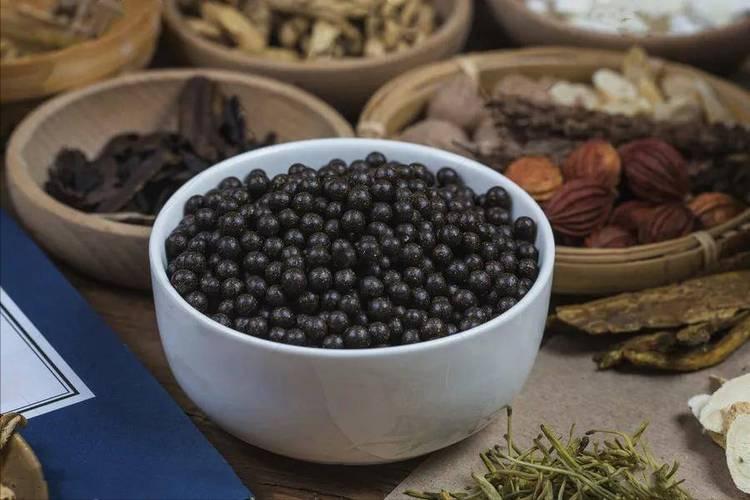
Finally, let's talk about evening. As evening approaches, yang qi gradually recedes, while yin qi begins to gather and store. At this time, the focus of health maintenance should shift to nourishing blood and calming the mind. For those struggling with insomnia, dream-disturbed sleep, palpitations, or forgetfulness, taking Gui Pi Wan before bedtime can be beneficial. Gui Pi Wan helps guide qi and blood back to the spleen, allowing the spleen to regulate and control them. Traditional Chinese medicine views the spleen as the source of qi and blood production and the organ responsible for governing blood. When spleen function is optimal, qi and blood are abundant and circulate in an orderly manner. Additionally, Gui Pi Wan nourishes the heart and calms the mind, harmonizing both the heart and spleen. The heart governs the spirit, so when the mind is calm and settled, sleep quality naturally improves, and issues like insomnia and dream-disturbed sleep can gradually be alleviated.
In summary, aligning our health regimen with the daily rhythm of qi and blood circulation is like paddling a boat with the current—it saves effort and yields better results. Give these methods a try, and may your body grow stronger and healthier!