Zhang Zhongjing's Zhenwu Decoction is hailed as the ultimate weapon for supplementing yang, capable of infusing yang qi deep into the very marrow of the bones.
In the treasure trove of traditional Chinese medicine, there are numerous formulas for supplementing yang, but Zhang Zhongjing's Zhenwu Decoction is often referred to as the "ultimate weapon" for addressing severe yang deficiency with dampness. Why such high praise? This stems from the complex conditions that arise from prolonged yang deficiency.
Many people are aware that yang deficiency can manifest as symptoms such as soreness and coldness in the lower back and legs, extreme sensitivity to cold, and cold hands and feet. However, over time, the issues often go beyond these. Insufficient yang qi impairs the body's ability to propel and warm fluids, leading to the accumulation of dampness within, which can transform into phlegm-rheum or even edema (e.g., swollen eyelids, pitting edema in the lower legs). At this point, complications arise: most yang-supplementing herbs are warm and drying in nature. Using them alone to supplement yang can easily "mix" with the existing dampness, potentially promoting damp-heat instead, making the individual feel even more uncomfortable.
The power of Zhenwu Decoction lies in its "dual approach": it can strongly warm and tonify the spleen and kidney yang, while efficiently promoting diuresis and dispelling dampness. Moreover, its design is exquisite, warming yang without contributing to heat, and promoting diuresis without harming yin. Let's take a look at its formulation logic (which can be understood as a three-layer design):
Warming yang and dispelling cold, transforming qi to move water (core driving force):
Aconite: This is the "general" in the formula. It is pungent and intensely hot, capable of deeply penetrating the zang-fu organs. It is particularly skilled at warming kidney yang and spleen yang, reigniting the weakened yang energy in the body.
Ginger: Not just a kitchen seasoning, here it can warm and disperse cold pathogens, assisting aconite in warming yang. More importantly, it can warm the stomach and disperse water, promoting the spleen and stomach's function of transforming and transporting dampness.
Strengthen the Spleen and Drain Dampness (Dredging the Water Pathway):
Poria (Fuling): Sweet and bland in nature, mild and harmonious, it is a master at promoting urination and draining dampness, capable of expelling excess water and dampness from the body through urination.
Atractylodes Macrocephala Rhizome (Baizhu): Excels at fortifying the spleen and drying dampness. The spleen serves as the "central hub" for transporting and transforming water and dampness. When the spleen is healthy and functions well, water and dampness are less likely to internally generate and stagnate. The combination of Atractylodes Macrocephala Rhizome and Poria greatly enhances the power to dispel water and dampness.
Assisting and Moderating to Prevent Imbalance (Safety Valve):
White Peony Root (Paeonia lactiflora Pall.): This herb plays a crucial role here. First, it promotes urination, assisting Poria cocos (Fu Ling) and Atractylodes macrocephala (Bai Zhu) in expelling water. Second, with its sour taste and slightly cold nature, it nourishes blood and astringes yin, cleverly moderating the warm and drying properties of aconite (Fu Zi) and ginger (Sheng Jiang) to prevent excessive warming and supplementation from damaging the body’s yin fluids. This embodies the essence of "warming yang and promoting diuresis without harming yin."
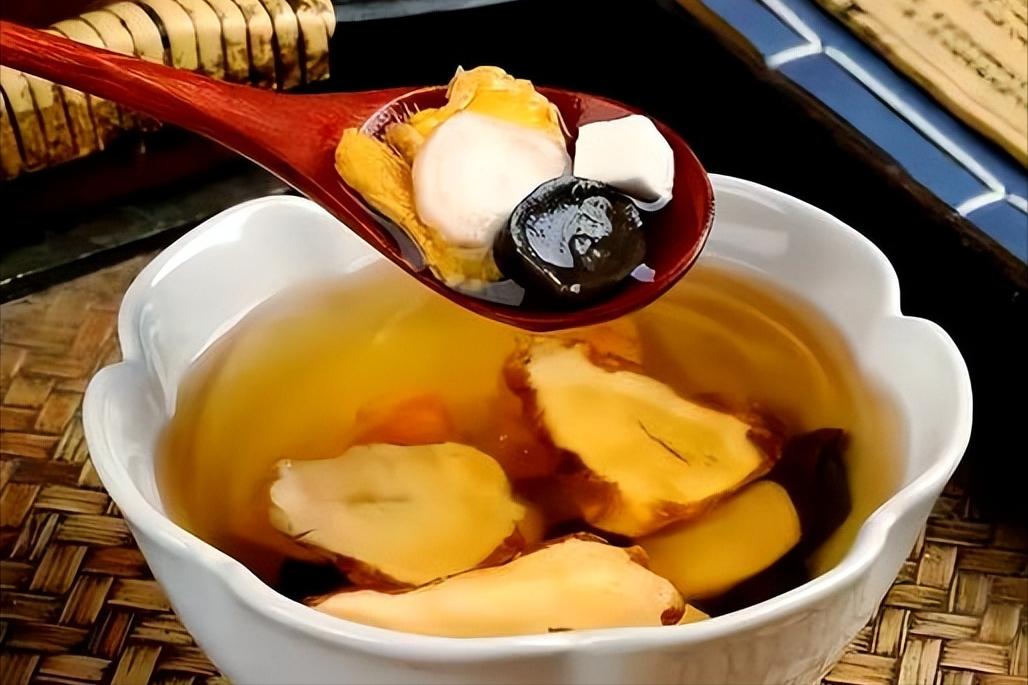
When combined, the whole formula ensures a steady source of yang warmth, strong diuretic action, warmth without dryness, and diuresis without depleting the body’s vitality. It addresses both the root and the symptoms, specifically targeting the complex condition where yang deficiency (fear of cold, cold hands and feet) coexists with water-dampness (edema, excessive phlegm, difficult urination, watery-slippery tongue coating).
Real Case Study:
Aunt Li, 55 years old, is one who benefited from Zhenwu Decoction. For many years, she had been extremely sensitive to cold, especially feeling as if her lower back and legs were soaked in icy water, to the point that she dared not wear skirts even in summer. Over the past year, she also developed recurrent lower limb edema, particularly in the afternoon or after exertion, leaving indentations when pressed, along with difficult urination. She visited Western doctors, who checked her kidney and heart functions and found no major issues, yet her cold intolerance and edema remained unresolved. Upon examination, I observed her complexion was pale and bloodless, her tongue pale with a white, watery-slippery coating. A comprehensive assessment indicated a typical pattern of spleen-kidney yang deficiency with water-dampness overflow. I prescribed a modified version of Zhenwu Decoction as the base formula (adding herbs to strengthen the spleen and stimulate appetite, as she had poor appetite). By the second week of treatment, she felt significantly warmer, especially in her legs and feet. By the fourth week, she was delighted to find the edema markedly reduced, urination much smoother, and her overall energy improved. She reported being able to get up in the morning to join square dancing.
Friendly reminder:
Zhenwu Decoction is indeed a classic renowned formula for treating yang deficiency with water retention, with remarkably effective results. However, three crucial points must be noted:
Strict syndrome differentiation is essential: This formula targets the pattern of spleen and kidney yang deficiency with internal water-dampness retention, characterized by symptoms such as aversion to cold and cold limbs, edema, difficulty urinating, a pale tongue with a white and slippery coating, etc. If the condition is purely kidney yin deficiency (manifested as heat intolerance, night sweats, dry mouth and throat) or internal accumulation of damp-heat (yellow and greasy tongue coating, bitter taste in the mouth), Zhenwu Decoction is absolutely unsuitable and may even worsen the condition.
Safety first with Aconite: The aconite in the formula possesses some toxicity. It must be used under the guidance of a professional TCM practitioner, ensuring it is properly processed and decocted according to standard protocols for safe application. The dosage must be precisely controlled. It is absolutely forbidden to purchase raw aconite on one's own or to arbitrarily increase the dosage!
Comprehensive regulation: While taking the medication, it is important to stay warm (especially the lower back, abdomen, and lower limbs) and to avoid cold and raw foods as well as excessive fatigue, as these are crucial for consolidating the therapeutic effects.
If you are experiencing similar issues, it is advisable to consult an experienced Traditional Chinese Medicine practitioner for a detailed diagnosis to determine whether this approach is suitable for you. While Zhenwu Tang is highly effective, it is crucial to find the right key for the right lock.