The more blocked the body's qi mechanism becomes, the heavier the phlegm-dampness will be. Zhongjing's primary phlegm-dispersing formula can clear the qi mechanism 100%.
Have you ever experienced this feeling? Even though there's nothing actually stuck in your throat, it feels as if something is blocking it, like a sticky mass, extremely uncomfortable, and you can't help but frequently clear your throat by making a "hmm" sound? In traditional Chinese medicine, there's a specific term for this condition called "feeling of a roast meat slice stuck in the throat," which describes exactly that sensation of discomfort as if a piece of grilled meat is stuck in your throat.

Where does this feeling come from? Mostly, it's because "phlegm-dampness" is obstructing the qi!
Traditional Chinese medicine holds that the qi, blood, and body fluids within the human body need to flow smoothly like a river (this is called "the ascending and descending of qi"). If the metabolism of water and fluids in the body becomes disrupted, generating excessive, viscous liquids that cannot be expelled (this is "phlegm-dampness"), it will clog the crucial passageway of the throat like silt. When the qi is obstructed and its ascending and descending functions become disordered, symptoms such as the sensation of a foreign body in the throat, tightness, and frequent urge to clear the throat arise.
Ancient Wisdom Formula: Banxia Houpo Decoction
To address this condition of "phlegm obstruction and qi stagnation," the Medical Sage Zhang Zhongjing, nearly two thousand years ago in the "Synopsis of the Golden Chamber," provided a very classic formula—Banxia Houpo Decoction. This formula is precise in its herbal composition, consisting of only five ingredients: pinellia tuber, magnolia bark, poria, ginger, and perilla leaf. Though the number of herbs is few, their combination is intricately linked and has a clear goal: to transform phlegm, regulate qi, and promote the free flow of the Triple Burner.
Pinellia Tuber: Acts as the "main force" for transforming phlegm and dissipating nodules. It also lowers rebellious qi and harmonizes stomach qi, helping to expel the obstructing phlegm-turbidity from the upper body.
Magnolia bark: Specializes in "qi stagnation." It can promote qi circulation and relieve bloating, focusing on unblocking the qi flow in the middle energizer's spleen and stomach, allowing qi to move.
Poria: Its function lies in "fortifying the spleen and draining dampness." With a sweet and mild nature, it slowly guides dampness trapped in the body out like dredging a waterway. When dampness is reduced, phlegm naturally has difficulty forming.
Ginger: Acrid and warm, it disperses and can both assist Pinellia in resolving phlegm and dissipating nodules, as well as warming the stomach to stop vomiting. It also counteracts the toxicity of Pinellia.
Perilla leaf: Carries a fragrant qi that can promote qi circulation and relieve depression. It is particularly adept at regulating lung qi and liver qi, making the qi dynamics even more unobstructed.
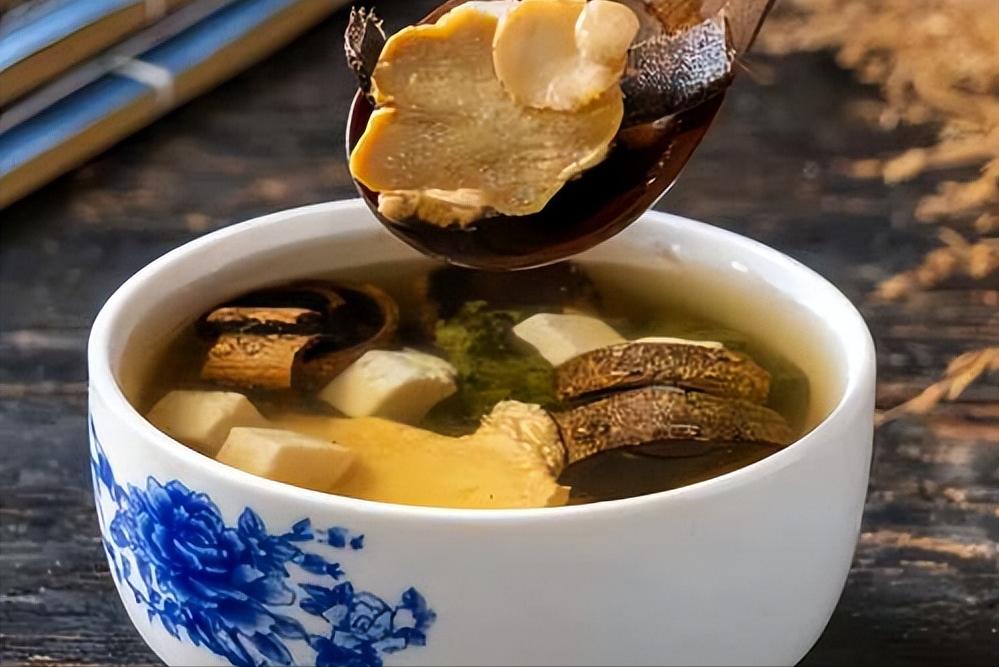
The core concept of this formula is: starting with "qi," to regulate the qi dynamics throughout the body (especially in the lungs, spleen, and liver), ensuring the unobstructed flow of the triple burner (which can be understood as the primary pathways for the movement of bodily fluids and qi in the body). When qi flows, water follows; when water flows, phlegm-dampness finds it difficult to accumulate. It's akin to dredging a blocked river channel, where the silt (phlegm-dampness) is naturally flushed away, effectively clearing both newly formed "fresh phlegm" and stubborn, persistent "old phlegm."
Real Case: Teacher Li’s Troubles Resolved
Here is a real-life example. I once treated a patient, Teacher Li, aged 45. She presented with the classic symptom of a sensation of obstruction in the throat, constantly feeling as if something was stuck there—neither swallowable nor coughable. This was particularly aggravated when she spoke extensively or experienced emotional agitation, leading to frequent throat clearing that disrupted her teaching. Various throat lozenges provided no relief. This is a typical case of "phlegm-qi obstruction." I treated her with Banxia Houpo Tang (Pinellia and Magnolia Bark Decoction) as the foundational formula, with modifications tailored to her specific condition (in Chinese medicine, treatment is individualized based on syndrome differentiation, adjusting the herbs or dosages as necessary). After approximately two weeks of consistent treatment, she reported a significant reduction in the foreign body sensation in her throat, a marked decrease in throat-clearing frequency, and an overall improvement in respiratory comfort, making her teaching sessions much easier.
Important Reminder:
If you also experience this feeling of "something constantly blocking the throat" and frequently want to clear your throat, don't just assume it's chronic pharyngitis and rely on lozenges. This could very well be a signal of "phlegm-dampness and qi stagnation" inside the body. It's important to consult a professional Chinese medicine practitioner for proper diagnosis to see if the Banxia Houpo Tang (Pinellia and Magnolia Bark Decoction) approach is suitable for you, or whether other conditioning methods are needed. Regulating the body's internal "circulation" (qi flow) and "waterways" (fluid metabolism) is the fundamental solution to the problem.
Traditional Chinese medicine emphasizes pattern differentiation and treatment, using different formulas for different symptoms to achieve effective healing. If you have similar conditions, the first step is to examine your tongue coating. Please send me a photo of your tongue coating along with your symptoms, and I will provide a free pattern differentiation to determine the general direction of your treatment.