It's true that ginseng greatly tonifies primordial qi, but without these 5 guide drugs, its effects are not significant
Today, let's talk about the herb ginseng. Ginseng is famously known for greatly tonifying primordial qi; in the realm of tonifying deficiencies, it is absolutely the "big boss," hailed as the "King of Tonifying Deficiencies." But did you know that without the help of a few effective "guide drugs," the effects of ginseng are significantly diminished, making it difficult to function precisely.
First, let's discuss ginseng paired with platycodon root. In traditional Chinese medicine, platycodon root has the effect of guiding the medicine upward. Some individuals suffer from lung qi deficiency, often experiencing shortness of breath, coughing, a low speaking voice, and frequent palpitations and chest tightness. In such cases, combining ginseng with platycodon root allows the medicinal power to ascend, specifically targeting and regulating lung qi deficiency. It's like hiring a "little assistant" for friends with lung qi deficiency, leading ginseng's medicinal power directly to the lungs, nourishing them effectively.
Now let's look at ginseng paired with salvia. Salvia enters the heart and has the effect of nourishing and activating heart blood. Nowadays, many people experience heart discomfort, chest tightness, a feeling of suffocation, pain, and daytime mental confusion. Using ginseng paired with salvia at this time is like "refueling" the heart while also "clearing the pipes," allowing the heart to function properly. Ginseng supplements qi, while salvia activates blood circulation. When these two are combined, the effect on nurturing the heart is exceptional.
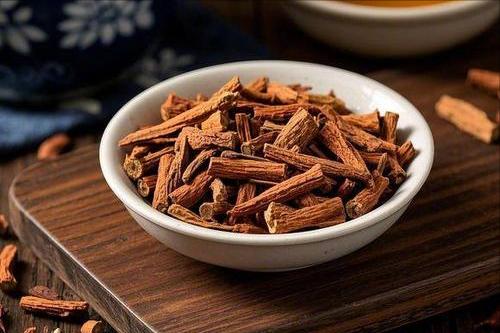
Next, there’s ginseng paired with aged tangerine peel. Aged tangerine peel, as a medicinal herb, can transform dampness and regulate qi. The classic Liujunzi Decoction includes this combination. Some individuals have poor digestion—whatever they eat, they eliminate quickly—and often complain of fatigue, with a swollen, scalloped tongue. This is essentially a case of spleen qi deficiency accompanied by heavy dampness. Aged tangerine peel acts like a "cleaner," first clearing dampness and accumulations from the spleen and stomach, then precisely guiding ginseng to nourish spleen qi. In this way, the spleen and stomach can function normally, and digestion and absorption improve.
Now let’s discuss ginseng paired with prepared rehmannia. Some individuals experience soreness and weakness in the waist and knees, find it difficult to climb stairs, feel as if their legs are weighed down, and appear listless. Female friends may have irregular menstruation, while male friends may experience premature ejaculation, nocturnal emissions, frequent nighttime urination, or even urinary incontinence. These are manifestations of kidney qi deficiency. Ginseng and prepared rehmannia, when combined, one supplements qi and the other nourishes yin—one yin, one yang—balancing water and fire. It’s like adding both fuel and water to the kidney’s "small furnace," replenishing kidney qi. Formulas such as Jinkui Shenqi Wan (Golden Cabinet Kidney Qi Pill) and Dabu Yuan Jian (Major Tonify the Source Decoction) actually follow this principle.
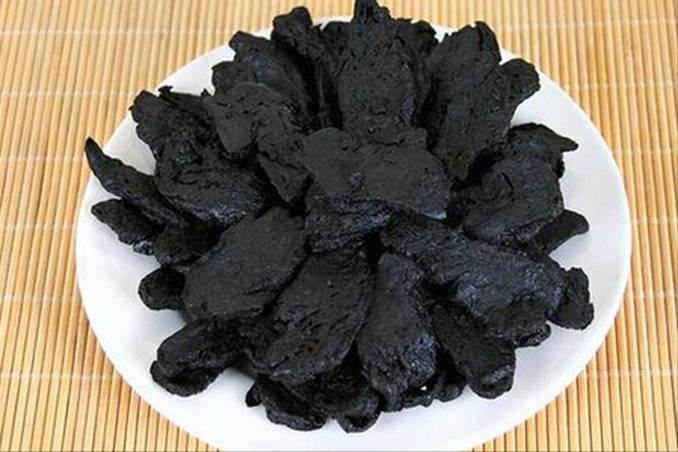
Finally, let’s talk about ginseng paired with bupleurum. Individuals with liver stagnation are like blocked water pipes, with obstructed qi flow. Bupleurum can soothe the liver and regulate qi, acting like a "pipe unclogger," clearing blockages. At this point, adding ginsenh increases the "water flow," thoroughly flushing away the stagnation. Some individuals often experience irritability, anger, low mood, and chest distension and pain—these are signs of liver qi stagnation. Using ginseng paired with bupleurum can effectively regulate this condition.
In summary, while ginseng is beneficial, it's crucial to pair it with appropriate guiding herbs to fully maximize its efficacy and precisely regulate our body's functions.