The Timeless Guizhi Decoction: One Formula Transforms into Thousands, Mastering It Benefits a Lifetime
Those familiar with the TCM classic "Treatise on Cold Damage Disorders" know that the first formula in the book is Guizhi Decoction, often hailed as the "Head of All Formulas." Many people think Guizhi Decoction is only for treating the common cold, but that's really an understatement of its capabilities. Today, I will explain several powerful uses of Guizhi Decoction in detail.
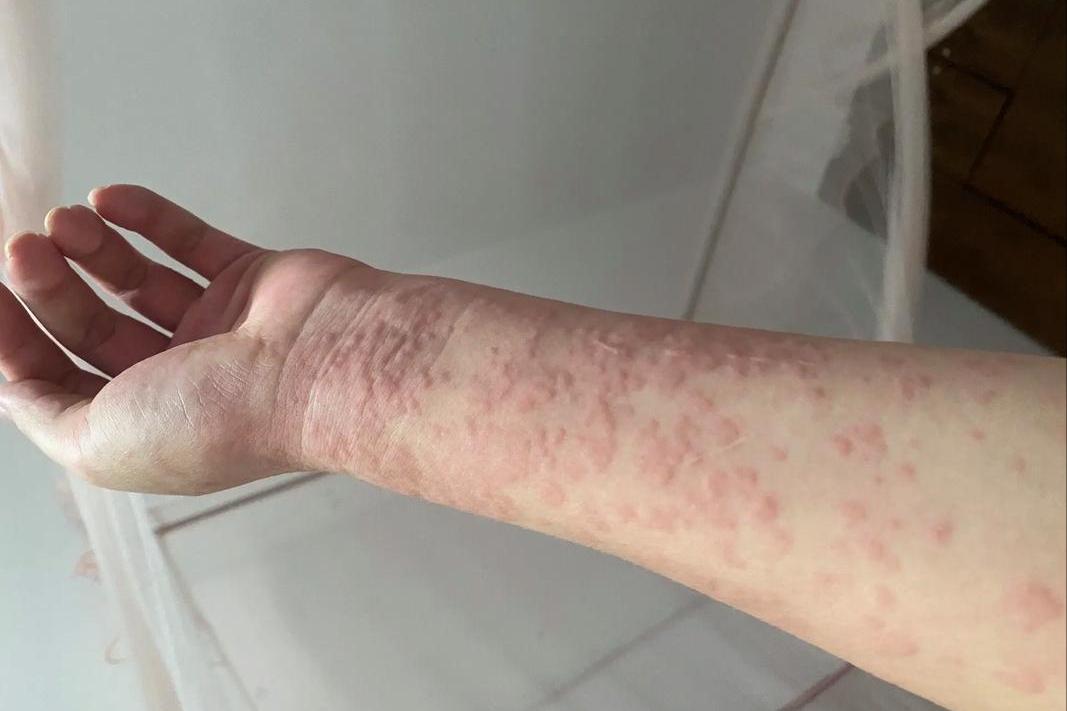
Let's start with urticaria, commonly seen in spring. As spring arrives, many suffer from urticaria, experiencing itching, pain, frequent sweating, and heightened sensitivity to wind and cold. From a TCM perspective, this is often due to pathogenic wind invading the muscle surface, disrupting the harmony between the nutrient qi (ying) and defense qi (wei). These two qi are like the body's "guards"—one is responsible for nourishment, the other for defense. When they become imbalanced, the body becomes susceptible to problems. Using Guizhi Decoction for regulation in such cases is quite appropriate.
I have a patient named Xiao Li who suffers from hives every spring. He told me that his body itches unbearably, and scratching immediately raises large red welts. He is also particularly sensitive to cold and can't stand even a slight breeze. After checking his pulse and examining his tongue coating, I determined that his hives were caused by disharmony between the nutritive and defensive qi, so I prescribed Guizhi Decoction for him. After taking it for a period of time, his symptoms significantly improved, and this spring, his hives hardly flared up at all.
Now, let's talk about allergic rhinitis. When allergic rhinitis flares up, patients are particularly sensitive to wind and constantly have a runny nose with clear discharge. Dressing becomes troublesome—if they wear too little, they feel cold; if they wear too much, they feel hot. This is actually another manifestation of disharmony between the nutritive and defensive qi in the body, and Guizhi Decoction can also be useful in such cases.
There are also people who experience sweating on only one side of their body, such as sweating on the right side but not on the left. In traditional Chinese medicine, the left side corresponds to yang, and the right side corresponds to yin. When the left and right sides are not in harmony, it indicates an imbalance of yin and yang and disharmony between the nutritive and defensive qi. Guizhi Decoction can similarly play a role in regulating this condition.
Some may ask: since Guizhi Decoction can induce sweating, can it be used by people with a weak constitution? In fact, the "Treatise on Cold Damage Diseases" states that weak individuals should not induce sweating. However, there is a formula called Xiao Jianzhong Decoction, which is based on Guizhi Decoction but adds maltose and increases the dosage of peony root. Maltose has an astringent property, and when combined with peony root, it enhances the effect of transforming yin through sour and sweet flavors, replenishing the body's yin fluids. Yin fluids are like the reserve supplies in a battle—when the supplies are sufficient, inducing sweating to dispel cold won't harm the body. Moreover, maltose and roasted licorice can also strengthen and tonify the spleen. Zhang Zhongjing used Xiao Jianzhong Decoction to treat various conditions of spleen and stomach deficiency with cold. If astragalus is added to it, it becomes Huangqi Jianzhong Decoction. Astragalus can elevate yang and replenish qi, making it more suitable for patients with severe spleen and stomach deficiency with cold or even those experiencing consumptive fatigue.
Additionally, adding kudzu root and ephedra to Cinnamon Twig Decoction forms Kudzu Root Decoction. The kudzu root herb is quite interesting - its vines resemble the body's meridian channels. When affected by wind and cold pathogens, presenting with stiffness in the neck and pain at the back of the head (symptoms of the taiyang meridian), Kudzu Root Decoction becomes effective. Kudzu root relaxes and unblocks the meridians, while ephedra releases the exterior and disperses wind pathogens - much like giving the neck a massage. Through this dual action of relaxation and dispersion, the wind-cold pathogens naturally dissipate.
Increasing the dosage of cinnamon twigs in Cinnamon Twig Decoction can enhance its function of warming and unblocking the heart vessels while invigorating heart yang, transforming it into Cinnamon Twig Decoction with Additional Cinnamon Twigs. Conditions like "running piglet qi" (奔豚气), palpitations, arrhythmia, and insufficient qi when speaking can be effectively treated with this modified formula.
Thus, Cinnamon Twig Decoction has numerous applications that shouldn't be underestimated. If experiencing any of the conditions mentioned above, consulting with a professional Traditional Chinese Medicine practitioner is advisable - Cinnamon Twig Decoction might prove to be exactly what's needed.