Knowing How to Seek Yang from Yin Can Improve Kidney-Yang Tonifying Effects by Tenfold, Nourishing Deep into the Marrow of the Bones
If we master the treatment approach of seeking yang from within yin, the effect of tonifying kidney-yang can be improved by several times. When many people suffer from yang deficiency, they think of using very pungent and hot Chinese herbs like Rougui (Cinnamomum cassia) and Fuzi (Aconitum carmichaeli) to tonify yang. However, doing so can easily lead to excessive internal heat. Why is that? Because in Traditional Chinese Medicine theory, the nature of fire is to rise upward. If one tonifies with warming and supplementing herbs excessively, this fire gets pushed up to the upper jiao, and the person will exhibit symptoms of excessive heat, such as feeling irritable and restless, developing mouth ulcers, and having trouble sleeping at night.
So, what should we do if this situation occurs? We can include herbs like Mudanpi (Paeonia suffruticosa cortex), Zexie (Alisma orientalis), Fuling (Poria cocos), Shanzhuyu (Cornus officinalis), and Shanyao (Dioscorea opposita) in the formula. This actually employs the concept of 'three tonifying and three draining,' using both yin-nourishing and yang-warming herbs together. Shanzhuyu has an astringent effect, and Fuling can guide the qi downward. By leveraging their properties, we can pull the fire from the upper jiao down to the lower jiao. This is what's known in TCM as 'guiding fire back to its source,' making the fire stay obediently in the lower jiao.
Moreover, we must also address the issue of the spleen and stomach. The spleen and stomach are the foundation of acquired constitution and the source of qi and blood production. If the spleen and stomach are weak, it becomes difficult for medications to be absorbed and utilized. We can add chicken gizzard lining to the formula. Chicken gizzard lining helps eliminate damp accumulation and phlegm-dampness from the body, thereby improving the spleen and stomach's transformative transportation and reception functions. Additionally, chicken gizzard lining has an astringent property, allowing medications to remain in the body for a longer period to exert their effects more effectively.
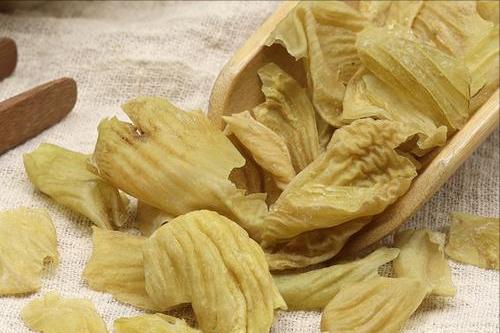
This is especially important for the elderly, whose physical condition tends to be more complex. They often present with dual deficiency of yin and yang and weakened stomach qi. Therefore, for them, using a method that seeks yang within yin and seeks yin within yang, combined with fortifying the spleen and harmonizing the stomach, yields very effective results.
However, young people differ from the elderly. The constitution of young people is often characterized by excessive pathogenic factors, such as phlegm-dampness and food stagnation. Thus, when treating young individuals, it is advisable to emphasize purgative methods and reduce the use of tonics. By expelling the excessive pathogenic factors from the body, health can naturally be restored.