The Three Levels of Leading Fire Back to the Source: Low Level Regulates Spleen and Stomach, Intermediate Level Regulates Yin and Yang, Advanced Level Regulates Deficiency and Excess
Today, let's talk about the concept of "Leading Fire Back to the Source" (Yin Huo Gui Yuan). It actually consists of three levels: the low level regulates the Spleen and Stomach, the intermediate level regulates Yin and Yang, and the advanced level regulates Deficiency and Excess.
In our daily lives, many people seem quite peculiar—they clearly get "inflamed" (Shang Huo) very easily, yet they constantly suffer from diarrhea. The upper body feels as hot as a ball of fire, while the lower body is as cold as an ice cellar. In the eyes of Traditional Chinese Medicine, this is a classic case of "Upper Heat and Lower Cold." Why does this happen? TCM teaches that the human body is a whole, where Qi, blood, and the Zang-Fu organs are all interconnected. This "Upper Heat and Lower Cold" occurs because Yang Qi is not staying where it belongs; instead, it is floating upward due to deficiency. We must find a way to lead this Yang Qi back down into the Kidneys—this is what we call "Leading Fire Back to the Source."
Below, I will explain the three methods of "guiding fire back to its source."
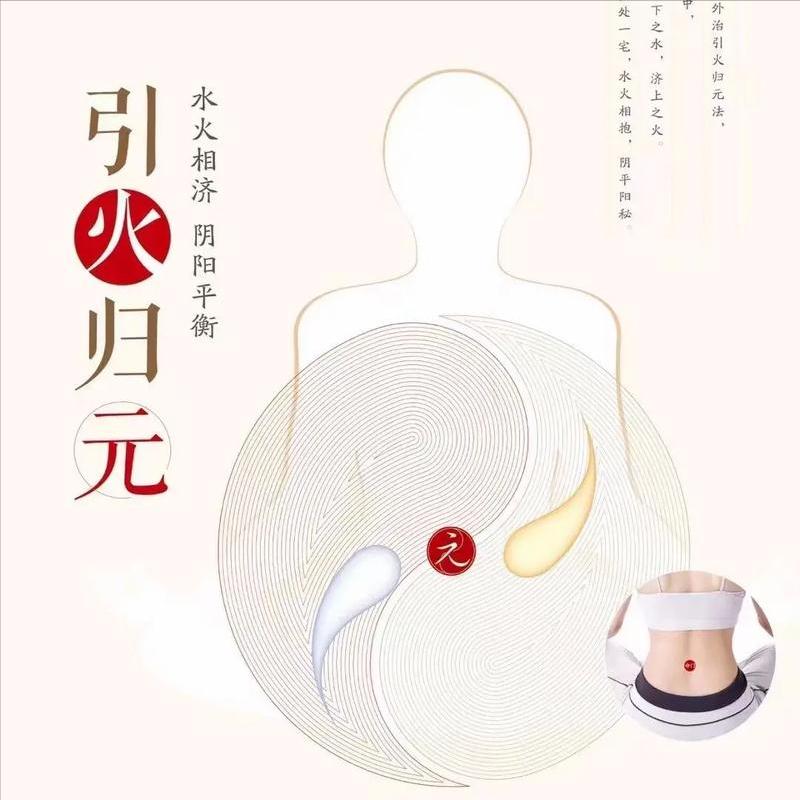
First, let's talk about regulating the spleen and stomach. In Traditional Chinese Medicine (TCM) theory, the spleen and the kidney are the foundations of the body's energy and metabolism. The spleen acts like a "logistics manager," responsible for transforming the food we eat into subtle substances to provide energy for the body. The kidney, on the other hand, is like an "energy warehouse," storing the body's innate and acquired essence. If the functions of the spleen and kidney are insufficient, the body is like a machine without enough fuel; with inadequate firepower, the Yang energy tends to float upward. At this time, people are prone to fatigue, weakness, cold hands and feet, and indigestion. Therefore, regulating the spleen and stomach is about building a solid foundation for the body so that the spleen and kidney can function normally, allowing the Yang energy to stay obediently below.
Next, let's talk about regulating Yin and Yang. An imbalance between Yin and Yang is the root cause of many diseases, especially the issue of "fire not returning to its source." TCM teaches that Yin and Yang must be balanced for the body to be healthy. If Yang energy is too exuberant, it's like a fire burning too fiercely, and symptoms of "excessive internal heat" will appear, such as a flushed face, insomnia, and irritability. If Yin energy is insufficient, it's like having not enough water to nourish the body, leading to dry mouth and throat, night sweats, and heart palpitations. Therefore, regulating Yin and Yang is about restoring the body's balance so that the fire can return to its proper place and the body's ailments can subside.

Finally, let's discuss regulating deficiency and excess. Some people have stabilized their Spleen and Kidney foundation and balanced their Yin and Yang, yet they still feel like they are constantly "overheating" (suffering from internal heat). In these cases, the problem likely lies in the balance between deficiency and excess. What is the difference between deficiency fire and excess fire? To use an analogy, excess fire is like a light bulb with too much wattage—it's blindingly bright. Deficiency fire, on the other hand, is like a light bulb with an unstable power supply; it looks lit, but it lacks real strength. People with deficiency fire will feel fatigued, sensitive to cold, and have weak immunity, while simultaneously being prone to inflammation and feeling a heavy sensation in their limbs. In Traditional Chinese Medicine, deficiency fire is generally caused by insufficient Yin fluid, which fails to restrain the Yang energy, causing the Yang to become relatively hyperactive. In this situation, one must nourish Yin to lower the fire, effectively "leading the fire back to its source."
This "leading fire back to the source" is like adjusting the parts of a "large machine"—the body—so that every component can function normally. If you are also struggling with the issue of "upper heat and lower cold," you might as well start with these three levels to properly regulate your body.