Autumn Equinox Health Preservation: Autumn Dryness Intensifies, Day and Night Equal — 4 Scientific Conditioning Methods to Protect Health
At the Autumn Equinox, day and night are equal; health preservation should follow the law of yin-yang balance, keeping the body in a state of “yin balanced and yang concealed.” As stated in Suwen · Zhizhen Yaoda Lun: “Carefully observe the locations of yin and yang, using equilibrium as the aim,” meaning that the locations of yin and yang must not become skewed.
Traditional Chinese medicine holds that the body's life activities must adapt to the yin-yang changes of the natural world. Therefore, after the Autumnal Equinox special attention should be paid to preserving and guarding the internal yin qi; daily routines, diet, mental state, and exercise should all follow the principle of "nurturing and gathering."
Four Aspects of Autumn Equinox Health Preservation
1. Regulate sleep and wake cycles
During the Autumnal Equinox period one should continue the habit of going to bed early and rising early, conforming to the autumnal climatic changes to facilitate the consolidation and storage of the body's yang qi; the deeper the storage, the more favorable it is for growth in the coming spring and summer. In general, it is appropriate to go to sleep between 21:00 and 22:00 and wake between 05:00 and 06:00.
After the Autumnal Equinox, clothing should conform to the need to "retain yin fluids internally and withdraw yang qi inward"; one may practice some moderate "autumn conditioning by slight exposure to cold" (qiu-dong), but the premise is to avoid feeling cold.
In addition, as temperatures drop, attention should be paid to placing mattresses or bed pads made of pure cotton with good thermal insulation on the bed. This is especially important for elderly friends with chronic diseases; after the autumnal equinox they should no longer sleep on cooling mats, and it is best to replace towel quilts with thin quilts that have better heat retention.
2. Appropriate Exercise
After the autumnal equinox, autumn deepens and cool breezes blow, though there are also many crisp, clear days—this is a good time to engage in physical exercise. Appropriate exercise can mobilize the body's yang energy, promote qi and blood circulation, and help prevent excessive constriction of the body.

Jogging: Jogging can effectively improve cardiac function and ensure cerebral blood supply. In addition, it can stimulate metabolic activity, increase energy expenditure, enhance resistance, and make people more energetic.
Climbing hills: Climbing hills can strengthen physical fitness and has direct benefits for vision, cardiopulmonary function, limb coordination, the consumption of excess body fat, and delaying aging.
Diaphragmatic breathing: Lie flat on the bed and take long inhales and long exhales 100 times to help expel waste gas.
3. Healthy diet
"Dryness" is the predominant qi of autumn. Traditional Chinese medicine says "dryness tends to injure the lung," meaning that during this season the body is prone to be invaded by dry pathogenic factors that damage the lungs. Therefore, autumn health preservation should start with nurturing the lungs.
Dietary principles to consider during the Autumnal Equinox:
Protect the stomach by eating pumpkin: After the Autumnal Equinox, the climate becomes cooler and stomach ailments are more common, so pay special attention to keeping the stomach warm. Pumpkin is warm in nature and sweet in taste, enters the spleen and stomach meridians, can tonify the middle and augment qi, and is an excellent food for warming and protecting the stomach in autumn.
Moderation in supplementation: When adding nutrients or “building up” during the Autumnal Equinox, do not overdo it; keep it moderate. Avoid taking supplements without illness, which only increases expense and may harm oneself; avoid following trends and overusing tonic products, as excessive use can be counterproductive.
Eat moistening and sour foods: According to the principle “moisten what is dry,” you can appropriately eat more foods that nourish yin and moisten dryness, such as sesame, walnut, honey, pear, sugarcane, persimmon, banana, water chestnut, olive, lily bulb, white fungus, and radish.
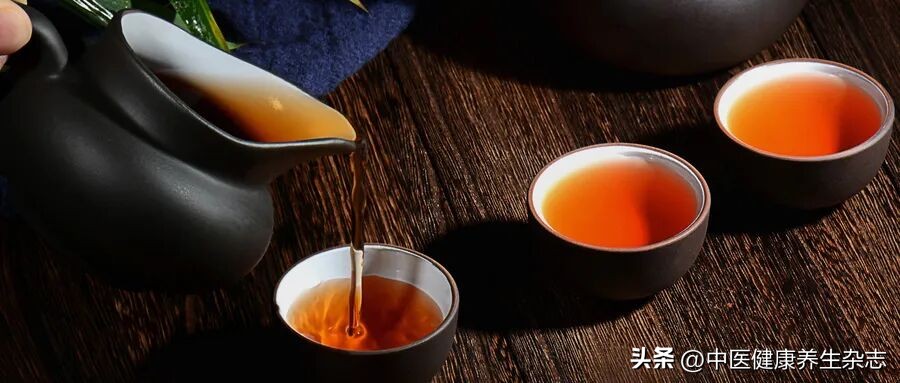
Aged Plum Pu-erh Tea
[Ingredients] Pu-erh tea 10 g, aged tangerine peel (chenpi) 5 g, smoked plum (wumei) 10 g.
[Preparation] Wash the aged tangerine peel and smoked plum, then cut the tangerine peel into pieces and slit the smoked plum. Place the Pu-erh tea, tangerine peel, and smoked plum together in a teapot, pour in boiling water, discard the first infusion, pour in boiling water again, filter and drink the tea soup.
[Effects] Quenches thirst and generates fluids, aids digestion and nourishes the stomach. Suitable for those with dry mouth and throat, poor appetite, and indigestion.
4. Health and wellness
Acupoint massage
The Feishu (BL13) acupoint is the site on the back where the lung qi is transmitted and corresponds to the internal and external aspects of the lungs. It is an important acupuncture point for treating lung diseases. Massaging the Feishu point can release the exterior and disseminate the lung, clear heat and regulate qi, harmonize the lung and nutritive (ying) aspects, and replenish deficiency while clearing heat from overexertion.
Location: On the back, below the spinous process of the 3rd thoracic vertebra, 1.5 cun lateral to the midline.
Procedure: Each night before sleep, sit upright on a chair, knees naturally apart, hands resting on the thighs, head upright and eyes closed, whole body relaxed. Inhale into the chest, form both hands into hollow fists, lightly tap the back at the Feishu (BL13) points dozens of times, while using the palms to pat the sides of the back from bottom to top; continue for about 10 minutes.
Soak feet in hot water
Soaking the feet in hot water before bed has the effect of consolidating yang.