Spleen and Kidney Yang Deficiency Type Diabetes: Apply Plaster to These Acupoints + Medicinal Materials to Warm Yang Without Causing Heat
With changes in modern lifestyles (irregular diet, emotional distress), the diabetic patients I see clinically often present with clear symptoms of spleen and kidney yang deficiency such as aversion to cold and fatigue. "Spleen and kidney yang deficiency" has become one of the pathomechanisms of modern consumptive disease (diabetes). In spleen-kidney yang deficiency type diabetes, clinical manifestations often include lassitude, fear of cold with cold limbs, poor appetite, and other symptoms. Acupoint application therapy, as a brilliant gem among external TCM treatments, demonstrates its unique advantages in regulating spleen-kidney yang deficiency type diabetes.
Use of warming yang herbs
Acupoint application therapy is based on meridian theory: specific Chinese herbal medicines are selected and blended with media such as water or vinegar into a paste, or made into ointments or pill forms, and applied directly to acupoints or affected areas to achieve noninvasive treatment. This therapy follows the principle of syndrome differentiation and treatment; according to the effects, indications, and channel tropism of the herbs, it acts via acupoint penetration on the zang-fu organs to harmonize ying and wei, strengthen the spleen and tonify the kidney, and revive righteous qi, thereby balancing yin and yang. For spleen-kidney yang deficiency type diabetes, warming kidney-yang medicines such as prepared aconite (fuzi), curculigo (xianmao), and eucommia (duzhong) are often selected, and may be combined with danshen, kudzu root (gegen), qinghao, astragalus (huangqi), and others.
Formulations and acupoint selection for spleen-kidney yang deficiency
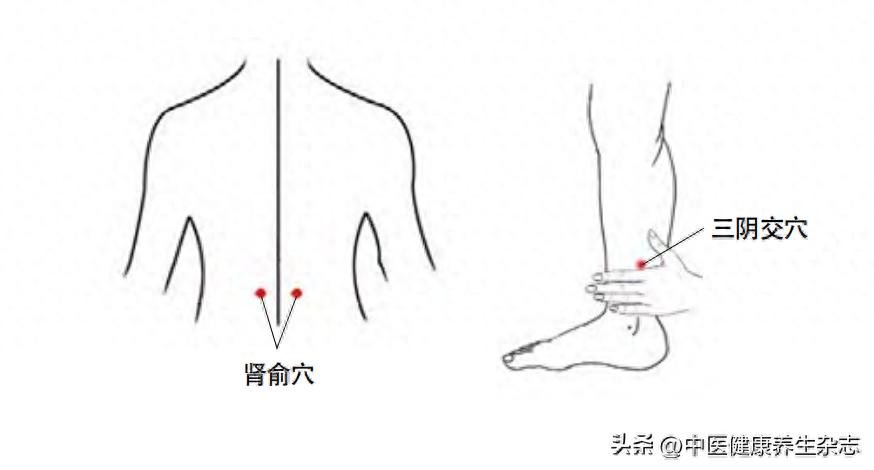
For point selection, choose acupoints according to pattern differentiation, such as Shenshu (BL-23), Pishu (BL-20), Sanyinjiao (SP-6), and Zusanli (ST-36).
Shenshu (BL23)
Shenshu is the dorsal back-shu point of the kidney, a surface reflection point of renal qi on the back. It functions to tonify the kidney and replenish essence, nourish yin and increase fluids, and regulate and supplement the root of prenatal constitution. Studies indicate that stimulating this point can modulate the endocrine system and thereby influence blood glucose control.
Pishu (BL20)
Pishu is the dorsal back-shu point of the spleen; stimulation of Pishu can promote the spleen’s transportive and transformative functions, normalizing the distribution of body fluids.
Sanyinjiao (SP6)
Sanyinjiao regulates the three channels of liver, spleen, and kidney. This point also has the effect of strengthening the spleen and resolving dampness.
Zusanli (ST36)
Zusanli (ST36) is the lower He-sea point of the stomach and is the principal point for regulating spleen and stomach function. The human endocrine systems are closely interconnected; stimulation of Zusanli can promote gastrointestinal secretion and transport functions and, by promoting insulin secretion, achieve blood glucose reduction.
Advantages of acupoint topical application
Non-invasive and safe
As a noninvasive treatment modality, acupoint topical application can effectively avoid the potential gastrointestinal irritation of oral medications and the potential harm to liver and kidney function, and reduce the pain and risks associated with injections. For patients with spleen–kidney Yang deficiency type diabetes, particularly those who are intolerant to oral drugs or who have hepatic or renal insufficiency, acupoint topical application is especially suitable.
Sustained effect
Acupoint topical application uses acupoints as conduits to allow medicinal components to penetrate the skin and reach internal organs, producing sustained effects. This therapy shows unique advantages in managing spleen–kidney Yang deficiency type diabetes. It can continuously warm and tonify spleen and kidney Yang qi, promote smooth circulation of qi and blood, and effectively alleviate symptoms such as fatigue, lack of strength, and sensitivity to cold.
Comprehensive conditioning
Acupoint plaster therapy not only has the effect of regulating the spleen and kidneys but can also, through stimulation of meridians and acupoints, exert a comprehensive effect of regulating the internal organs and enhancing the body's immunity. Spleen–kidney yang deficiency is often accompanied by weakened body immunity and various complications, while acupoint plaster therapy can comprehensively improve the patient's constitution and enhance their quality of life.
Although acupoint plaster therapy has unique advantages in spleen–kidney yang deficiency type diabetes, in actual treatment it still needs to be used in conjunction with various treatment methods to implement comprehensive therapy. Because patients differ significantly in constitution, disease state, and drug sensitivity, when applying acupoint plaster therapy it is essential to diagnose according to the patient's specific condition and implement individualized treatment measures.
Medications for acupoint plasters must be selected according to the patient's condition and constitutional differentiation. It is imperative to avoid selecting excessively irritating or toxic drugs to prevent adverse reactions or worsening of the condition. The duration of plaster application should be determined based on the properties of the drug and the needs of the condition. Generally, for less irritating drugs, each application of 4–6 hours is more appropriate; for more irritating drugs, the application duration should be appropriately shortened and the patient's reactions closely monitored.