Atractylodes paired with one herb clears dampness, wind-damp, and damp-heat, doubling the effect
Today I will talk with you about the "golden partner" for eliminating dampness — Atractylodes (Cang Zhu). This herb is recorded in the ancient text Yaopin Huayi as "pungent in taste and dispersing in action, warm in nature and drying, primarily enters the spleen and stomach," like a bulldozer with a built-in dryer that can uproot damp turbidity from the spleen and stomach. But the true power of Atractylodes is realized through skillful combinations with other herbs.
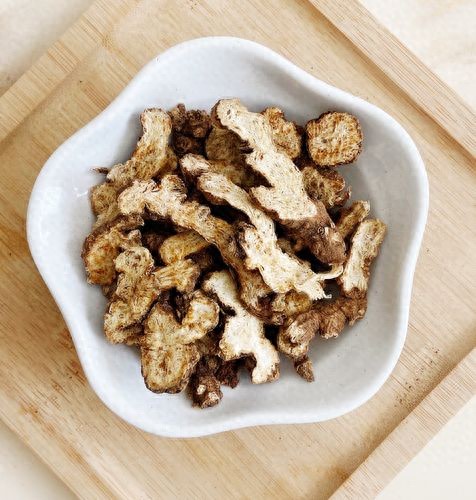
Atractylodes + Poria: the "clean-up crew" for dampness
If you always feel your limbs are filled with lead, and your face is swollen in the morning like over-fermented dough, this is most likely spleen deficiency with dampness. Atractylodes (Cangzhu) is warm and dries dampness, Poria (Fuling) is neutral and promotes urination; one is like a brazier baking wet clothes, the other like a sponge drawing out moisture. The spleen governs the transformation and transportation of fluids and dampness; these two herbs are like installing a pump in the spleen and stomach—no matter how heavy the dampness, it cannot withstand the dual approach.
Atractylodes + Chenpi: the "ventilation and pipeline worker" for the spleen and stomach
People with dampness obstructing the spleen often feel bloated after two bites of food and belch with a sour, rotten smell. Atractylodes dispels dampness like clearing a clogged sewer, while Chenpi (aged tangerine peel) moves qi like pressurizing the pipes. In traditional Chinese medicine it is said, "treating dampness without regulating qi is not proper treatment"; Chenpi restores the qi mechanism of the spleen and stomach, like installing a one-way valve for dampness to prevent it from recurring while being expelled.
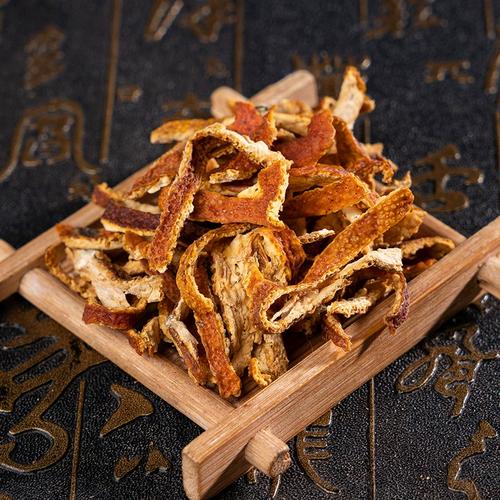
Atractylodes + Du Huo: the "dismantling expert" for wind-cold-dampness
Friends with joint cold pain or a chilly breeze coming from bone seams, take note: this is cold-damp Bi obstructing the meridians. Du Huo is the "warming fan" among wind herbs, while Cang Zhu is the "dryer" of the dampness realm; paired together it’s like giving the joints a sauna. Wind can overcome dampness, and Du Huo can pull wind and cold pathogens hidden deep in the muscles out into the open, leaving the dampness with nowhere to hide.
Cang Zhu + Huang Bai: the "fire extinguisher combo" for damp-heat
Dampness and itching in the lower body, or recurrent gout attacks—this is damp-heat sinking downward. Huang Bai clears heat and dries dampness; Cang Zhu dries dampness and strengthens the spleen—one is like a fire extinguisher cooling things down, the other like a bulldozer dredging the sludge. Damp-heat is like silt blocking a drain, and these two herbs act like a joint clearing crew that thoroughly removes the external damp-heat.
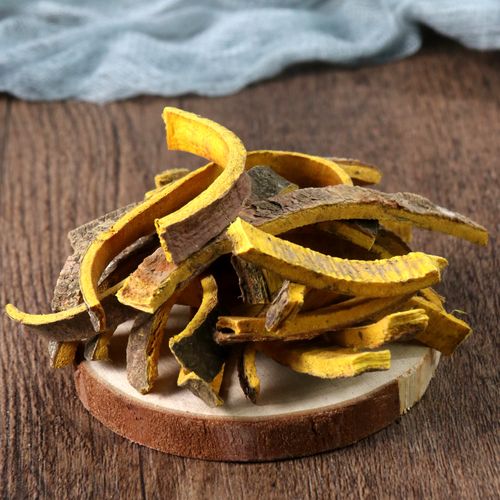
It should be noted that Atractylodes (Cangzhu) is warm and strongly drying, so attention to compatibility and dosage is required. For damp-heat constitutions pair Atractylodes with Phellodendron (Huangbai); for cold-damp constitutions pair it with Radix Angelicae Pubescentis (Duhuo); for spleen-deficiency with severe dampness pair it with Poria (Fuling); for qi stagnation pair it with Atractylodes and tangerine peel (Chenpi). Before using these herbs it is best to have a TCM practitioner take the pulse and examine the tongue coating—whether it is thick, and whether the pulse is deep or superficial—so the herbal combination can be precisely matched. Remember, eliminating dampness is not simply drying out fluid; one must regulate the spleen and stomach, unblocking the meridians, and harmonizing yin and yang—this is the essence of TCM dampness treatment.