To remove dampness without regulating qi is to halve the effect! Sanhe Powder unblocks the triple burner and resolves dampness obstruction
After prolonged sitting, chest tightness and hypochondriac distension; after eating greasy food, abdominal distension like a drum; sticky stools that cling to the toilet or dry, hard stools; on cloudy or rainy days, a heavy sensation throughout the body with joint soreness and lethargy—the root cause of these common discomforts among modern people lies in the "disharmony of the triple burner."
Traditional Chinese medicine holds that the triple burner is the "channel hub" for the circulation of qi, blood, and body fluids throughout the body. Once qi movement stagnates and dampness accumulates and obstructs, the channels will malfunction. More importantly, if the regulation of qi is neglected during dampness removal, dampness and turbidity will find it difficult to be transported, transformed, and expelled along with qi movement, inevitably greatly reducing the effectiveness of the treatment.
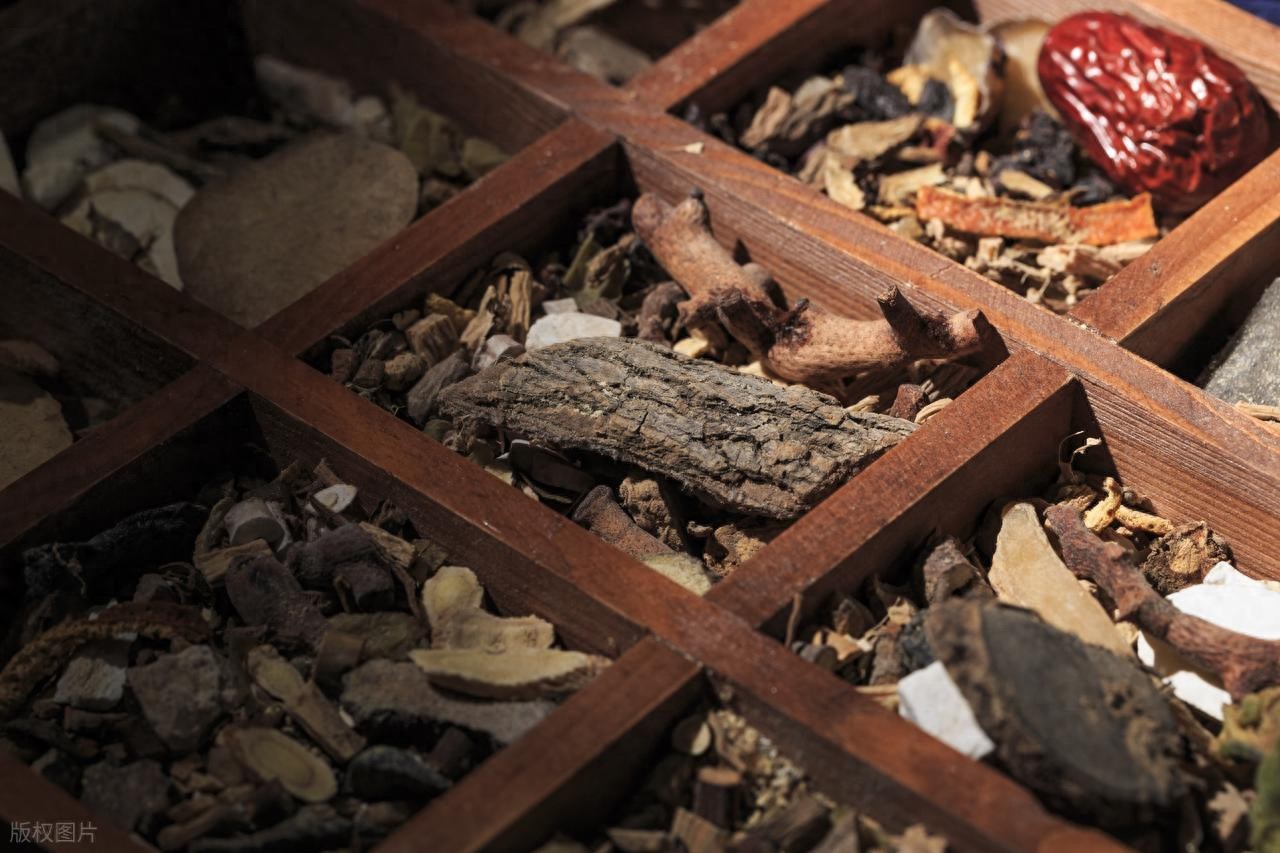
To solve this puzzle, one can refer to the classic formula from the Song Dynasty's "Tai Ping Hui Min He Ji Ju Fang" – the Sanhe Powder. As the name suggests, "Sanhe" means harmonizing the upper, middle, and lower San Jiao. Clinically validated for over a thousand years, its core efficacy lies in promoting Qi flow, resolving stagnation, dispelling dampness, and unblocking stasis. It can both regulate stagnant Qi and dissipate obstructed dampness, precisely matching constitutions with San Jiao disharmony.
Sanhe Powder is particularly suitable for individuals such as those with middle Jiao Qi stagnation manifesting as chest and abdominal fullness, or distension and pain in the ribcage; those with dampness obstructing the channels and collaterals, causing vexing pain in the limbs or a puffy, swollen face; and those with lower Jiao obstruction, presenting as dryness in the intestines and stomach, or difficult bowel movements. Elderly individuals with weak Qi may also use it after pattern differentiation.
Its modern common basic formula ratio is: equal parts of Notopterygium Rhizome or Root, Perilla Stem and Leaf, Eaglewood Wood, Chaenomeles Fruit, Areca Husk, as well as equal parts of Sichuan Lovage Rhizome, Honey-fried Licorice Root, Dried Tangerine Peel, Costus Root, Areca Seed, and Largehead Atractylodes Rhizome. It is important to note that ancient formulas need dosage adjustments based on age, constitution, and symptom severity; they should not be blindly copied.
The combination of herbs in this formula is highly ingenious, following the principle of "dispelling pathogens – promoting Qi flow – harmonizing – consolidating the healthy Qi." The 12 medicinal materials work together in a coordinated manner.
First, using Notopterygium Root and Perilla Stem and Leaves as the "vanguard," Notopterygium Root dispels wind-damp pathogens from the meridians, while Perilla Stem and Leaves both disperse external pathogens and unblock the middle energizer, clearing the peripheral obstacles for the unobstructed flow of the triple energizer. Next, Eaglewood, Chaenomeles Fruit, and Areca Peel are employed to promote Qi circulation and diuresis, addressing the core issue that "if Qi does not flow, water does not move," guiding the damp stagnation in the middle energizer downward for excretion. Subsequently, Sichuan Lovage Rhizome, Dried Tangerine Peel, Costus Root, and Betel Nut are used to regulate and smooth the Qi mechanism of the middle energizer; once the middle energizer is unobstructed, the entire triple energizer becomes smooth. Finally, Atractylodes Rhizome and Honey-fried Licorice Root are used to invigorate the spleen and replenish Qi, both assisting in transforming dampness and compensating for the potential depletion of vital Qi by Qi-promoting herbs, thereby consolidating the foundation of the regulation.