Sage of Medicine's Cold Cough Special Prescription Xiao Qing Long Tang: Dispersing Cold and Resolving Fluid Retention, Rapid Relief of Cough and Asthma
As the weather turns cooler, isn't it common for many people to take medicine haphazardly at the first sign of cough or asthma, only to find their condition worsening? In reality, this is often due to a failure to distinguish between cold and heat syndromes! Do you experience a heightened fear of cold, a sensation of wind penetrating your back, and exacerbation of cough and asthma upon exposure to cold? Do you suffer from chest tightness and shortness of breath when lying down at night, needing to prop up your pillow to sleep?
If the coughed-up phlegm is white, thin, and frothy, even resembling egg whites, and if you have phlegm in the throat but no thirst, it is highly likely "cold cough," the essence of which is "external cold with internal fluid retention"—when yang qi is insufficient, cold pathogens invade, combining with internal dampness to form cold fluid retention that stagnates in the lungs, creating a vicious cycle.
Don't use medications randomly in this case! The Minor Bluegreen Dragon Decoction from "Treatise on Cold Damage Disorders" by the Medical Sage Zhang Zhongjing is precisely the right prescription for this condition. It can release the exterior and dissipate cold, warm the lungs and transform retained fluid, specifically targeting cough and wheezing due to external cold with internal fluid retention. However, its medicinal strength and pathological mechanism are completely different from the Major Bluegreen Dragon Decoction, so they must not be used interchangeably.
When using Minor Bluegreen Dragon Decoction, accurate syndrome differentiation is essential. You can compare and check the following signs: a dull, darkish complexion with dark circles around the eyes (fluid rings) may indicate cold fluid stagnation internally; a pulse that is somewhat wiry also aligns with the characteristics of fluid-retention disorders; a moist, glossy tongue coating and thin, clear, cool-to-touch phlegm are all core indicators.
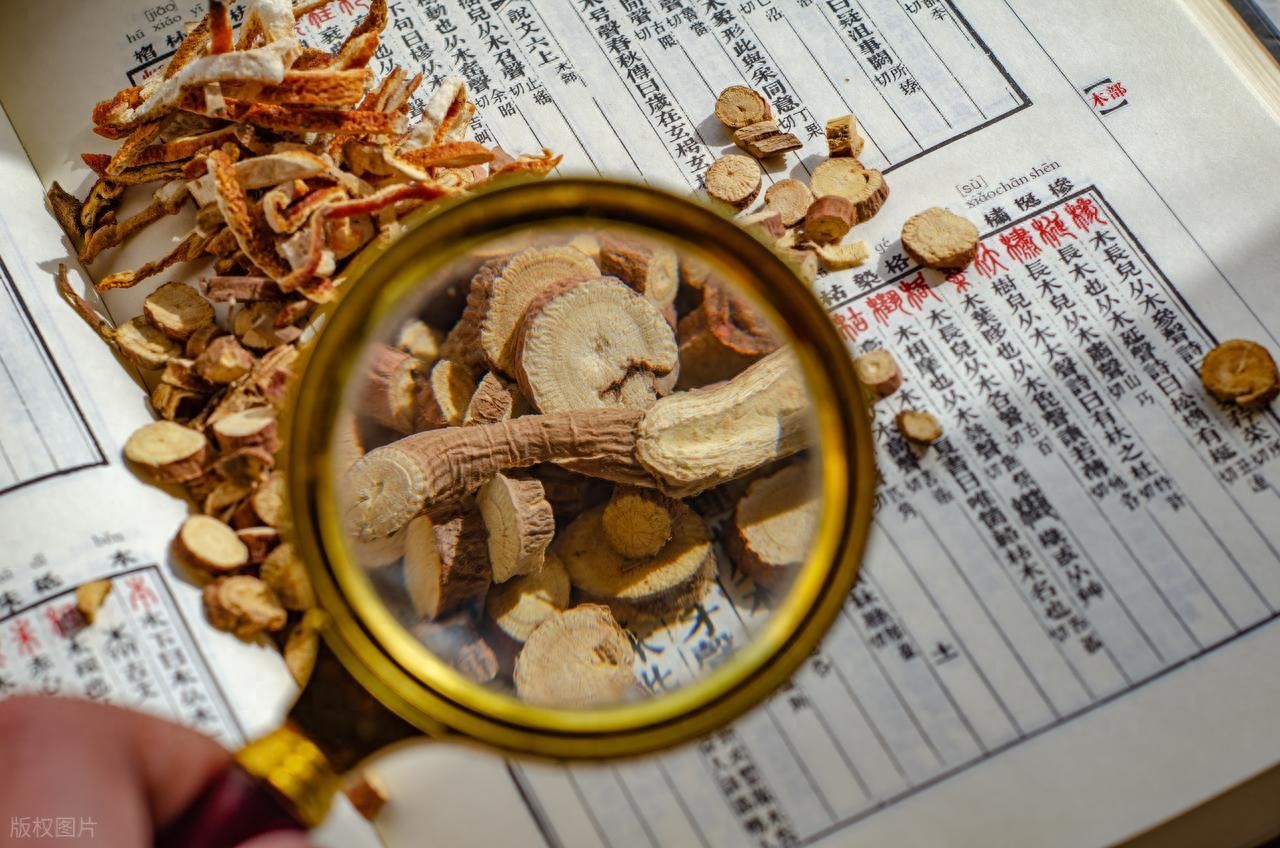
It is composed of eight medicinal ingredients including Ephedra, Cinnamon Twig, and Dried Ginger. Ephedra disperses external cold and diffuses lung qi; Cinnamon Twig combined with Dried Ginger warms yang and transforms retained fluid; Asarum and Pinellia clear stubborn phlegm; Schisandra and Peony root preserve yin and prevent qi depletion; while prepared Licorice harmonizes the other herbs. The formula achieves both dispersion and consolidation, addressing both the root cause and the symptoms.
Caution! It is contraindicated for those with lung heat or yin deficiency with dry cough. Discontinue use once effectiveness is achieved; do not take it long-term. Mild thirst after taking the medication is a positive sign indicating that the cold pathogen is beginning to dissipate. Compared to Poria, Cinnamon Twig, Atractylodes, and Licorice Decoction (Ling Gui Zhu Gan Tang) and Ephedra, Apricot Kernel, Gypsum, and Licorice Decoction (Ma Xing Shi Gan Tang), which respectively address cold vs. heat and exterior vs. interior syndromes, their applications are opposite; never use them incorrectly.
Do you experience symptoms like chills and coughing up white phlegm? Unsure if it's external cold with internal fluid retention syndrome? Feel free to describe your symptoms, and I can help with a brief differentiation to avoid using the wrong medication and delaying your recovery!