Moxibustion of These Three Acupoints Can Help Allergy Sufferers
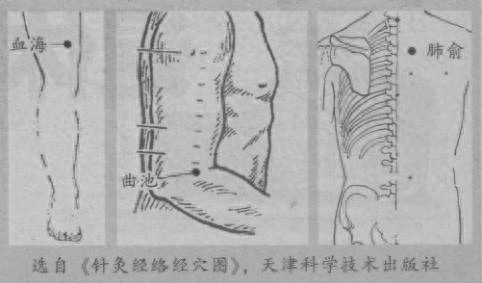
Introduction: Spring and summer are seasons of blooming flowers, yet beautiful flora can be a nightmare for allergy sufferers. At such times, trying moxibustion on the acupoints Xuehai (SP10), Quchi (LI11), and Feishu (BL13) may be beneficial.
"Allergy Sufferers," Learn Some Moxibustion
Song Lisheng
In the season of blooming flowers and warm spring, "allergies" are the only downside to the beauty. For those with allergic rhinitis, allergic asthma, or allergic skin conditions, spring often brings unbearable discomfort. In fact, one of the simplest methods in traditional Chinese medicine—moxibustion—can help "allergy sufferers."
A deputy chief physician from the Zhejiang Provincial People’s Hospital explained that the moxa sticks used in moxibustion are made from mugwort leaves. Mugwort leaves are warm in nature and can regulate the twelve meridians, pass through the three yin meridians, and harmonize qi and blood. Therefore, they can invigorate organ functions, boost immunity, and help combat allergies. For those prone to allergies in spring, regularly performing moxibustion on the following three acupoints is recommended.
Blood Sea Acupoint
The Blood Sea Acupoint belongs to the Spleen Meridian of Foot-Taiyin. Moxibustion at this point can regulate qi and blood, warm the meridians and promote circulation, nourish blood and moisten dryness, as well as expel wind and relieve itching. Use suspending moxibustion technique, apply once every other day, with a duration of 20 minutes per session.
Pool at the Bend Acupoint
The Pool at the Bend Acupoint is the He-Sea point of the Large Intestine Meridian of Hand-Yangming. Since the lung and large intestine are interior-exteriorly related, this point is particularly effective in treating skin itching and internal damp-heat disorders. It is commonly used to expel wind throughout the body and plays a prominent role in treating allergic skin diseases. It is also used in moxibustion therapy for allergic asthma. Use suspending moxibustion technique, apply once daily, with a duration of 30 minutes per session.
Feishu (BL 13) Point
The Feishu (BL 13) point is located 1.5 cun lateral to the lower border of the spinous process of the third thoracic vertebra, belonging to the Foot Taiyang Bladder Meridian. The Feishu point has the functions of regulating and tonifying lung qi, supplementing deficiency, and clearing heat. It is effective for allergic asthma. During moxibustion, suspended moxibustion is also used, applied once every other day, with a treatment time of 15 minutes per session.