Gan Zuwang: Experience in Treating Acute Suppurative Otitis Media
Introduction: In the initial stage of acute suppurative otitis media, the method is to promote surface relief and detoxify; in the middle stage, intense formulas (using bitter-cold herbs) are employed for aggressive attack; in the late stage, mild formulas (using sweet-cold herbs) are used to clear heat and dispel pathogens; in the recovery stage, heat-clearing and detoxifying methods are combined with nourishing Qi and blood, with clear distinctions between stages and no ambiguity. The purpose of not forgetting to nourish Qi and blood during the recovery stage is to prevent it from transforming into a chronic condition.
Acute Suppurative Otitis Media
Gan Zuwang
Patient Zhao, male, 4 years old. Initial consultation on May 15, 1999. No. 3 Middle School, Nanjing.
On the 4th day of a cold, fever had subsided, but there was deep pain in the right ear. The next day, the pain worsened and became unbearable, accompanied by body aches. Today, high fever, pain like pecking of a bird. Difficulty sleeping day and night. No bowel movement for two days. Refuses food but drinks excessively. Urine dark.
Examination: The right tympanic membrane is unclear upon inspection, with thick yellow pus accumulated deep inside. After cleaning, the tympanic membrane appears congested, with a small perforation in the central area, and pus draining from inside, showing a "lighthouse sign." The tympanic sulcus and surrounding area are also congested. Enlarged lymph nodes palpable in the right cervical and submandibular area, no adhesion, no tenderness.
Examination: Body temperature 38.5°C. Yellow, greasy tongue coating, rapid pulse (102 beats per minute).
Medical Record: Invasion by seasonal pathogenic factors during a common cold, which fails to be discharged and instead spreads transversely, transforms into heat and generates pus, infringing upon the auditory palace. This is precisely what Traditional Chinese Medicine refers to as "ting ear" (suppurative otitis media). The pus has just begun to rupture and discharge, coinciding with the peak of the condition. Promptly administer heat-clearing and toxin-resolving treatment to blunt its force and subdue its virulence. Huang Lian Jie Du Tang (Coptis Decoction to Relieve Toxicity) is the primary formula.
Coptis chinensis (Chuan Lian) 2g, Scutellaria baicalensis (Huang Qin) 2g, Phellodendron chinense (Huang Bai) 2g, Glycyrrhiza uralensis (Gan Cao) 3g, Lonicera japonica (Yin Hua) 6g, Atractylodes lancea (Cang Zhu) 3g, Fritillaria thunbergii (Da Bei Mu) 6g. Decoct 3 doses for oral administration.
Additionally, 3 vials of Phellodendron chinense (Huang Bai) solution. Usage instructions given verbally.
Second consultation, May 19, 1999.
Copious pus discharge, initially thick and viscous, but since yesterday it has become thin and white in color. The fever and chills have subsided, appetite has returned, the patient is calm and able to sleep, and bowel movements have resumed.
Examination: Pus accumulation in the external auditory canal; after clearing, a central perforation of the tympanic membrane is visible. The hyperemia around the tympanic sulcus has disappeared, returning to a normal state. Temperature: 36.8°C. Tongue coating thin, pulse normal.
Medical notes: With the substantial discharge of pus, the pathogenic toxins have been expelled. However, continued attention and treatment are still necessary to prevent progression into a chronic condition, which could lead to endless complications. The medication approach follows surgical conventions: "use bitter and cold herbs at the peak to suppress it, and sweet and cold herbs after the rupture to restore it." Modified Wuwei Xiaodu Yin (Five-Ingredient Decoction to Eliminate Toxins) is now prescribed.
6g honeysuckle, 6g chrysanthemum, 6g viola, 6g paris polyphylla, 6g scutellaria barbata, 3g angelica dahurica, 6g fritillaria thunbergii, 4g platycodon grandiflorum, 3g licorice. 5 doses to be decocted and taken.
Third consultation, examined on May 25, 1999.
Pus discharge has visibly decreased, everything is returning to a normal state. The patient is playful and has a strong appetite.
Examination: The external auditory canal is clean and dry, the perforation scar on the tympanic membrane has become faint and difficult to see. Discontinue medication on the 5th day.
Note: The Ding-Ban Mixture is one of the formulated prescriptions developed by my father for the Provincial Hospital of Traditional Chinese Medicine. It contains ingredients such as Herba Violae, Scutellaria Barbata, and Flos Lonicerae. Along with my father's other two signature medications—the Bi-Yuan Mixture and the Shen-Mei Buccal Tablets—these three have been the hospital’s highly effective flagship drugs for over 30 years, maintaining their reputation undiminished.
Further note: My father’s understanding of the pathological mechanism of acute otitis media is as follows:
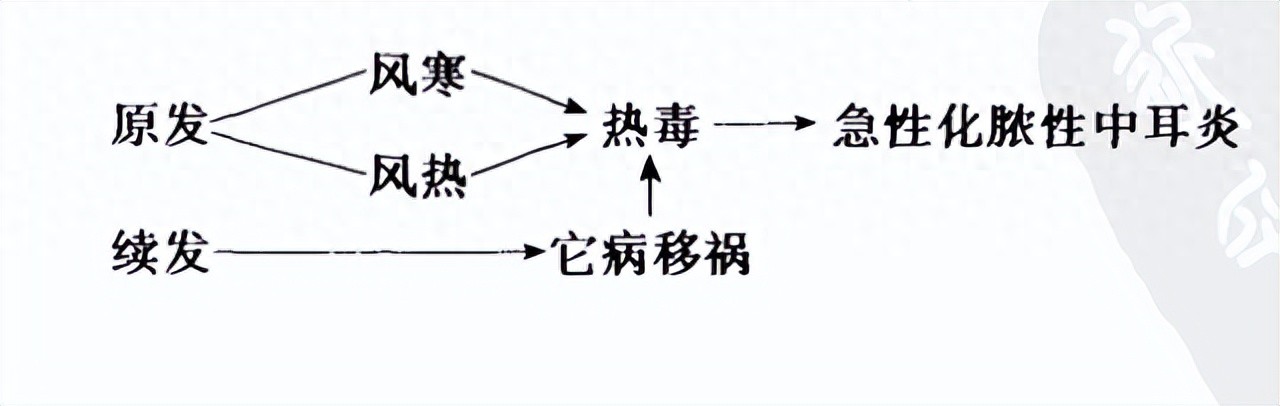
The clinical stages are:
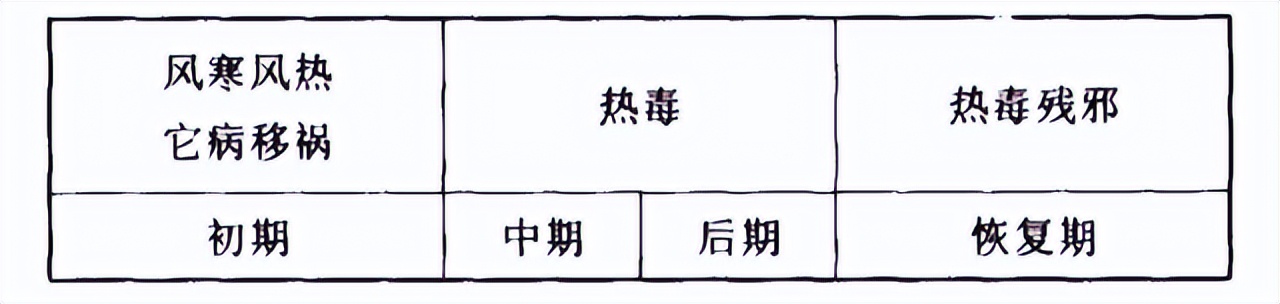
Consequently, his treatment principles and medication selection follow a systematic pattern: In the initial stage, the focus is on dispersing the exterior and detoxifying; in the mid-stage, potent formulas (using bitter-cold herbs) are employed for aggressive attack; in the late stage, mild formulas (using sweet-cold herbs) are used to clear heat and expel pathogens; and during the recovery phase, heat-clearing and detoxifying methods are combined with nourishing and harmonizing qi and blood. Each stage is clearly delineated without ambiguity. The emphasis on nourishing and harmonizing qi and blood during the recovery phase aims to prevent the condition from evolving into a chronic state.